 Ultimate guide
The Contractor's Guide to the Best Equipment for Site Grading
Last Updated: November 19, 2026
Quick Summary
The best equipment for site grading is the machine that matches your soil, slope, access, and finish tolerance, not the biggest one on the lot. A mini skid steer suits tight residential access, a dozer handles bulk cut on large sites, and a motor grader with grade control delivers tight finish tolerance.
- A motor grader produces the smoothest finish grade of any single machine.
- A grader cannot fix a rough grade that is off by a foot.
- Match the excavator to the typical task, not the biggest hole on the job.
- Choose small grading equipment by gate width and turning radius first.
- Call 811 before any digging and confirm permits in writing.
Table of Contents
- Matching Grading Equipment to Your Site Conditions
- Bulldozers and Motor Graders for Large-Scale Earthmoving
- Excavators and Loaders for Digging and Moving Soil
- Small Grading Equipment for Yards and Tight Sites
- Land Grading Equipment for Drainage and Finish Work
- Laser Grading Equipment for Precision Elevations
- Small Grading Equipment Rental Versus Buying
- Rough Grading to Finish Grading: The Step-by-Step Workflow
- Frequently Asked Questions
Matching Grading Equipment to Your Site Conditions
The best equipment for site grading is the machine that matches your soil, slope, access, and finish tolerance, not the biggest one on the lot. Contractors often overbuy capacity and homeowners often underbuy it, and both mistakes cost money. This guide breaks down machine classes, rental versus purchase math, and the rough-to-finish workflow so you can pick right the first time.
Site grading is the process of reshaping ground to a planned elevation and slope so water drains away from structures and surfaces sit level enough to build on. Get it wrong and every layer above it, from gravel to concrete, inherits the problem.
A Decision Matrix by Site Size, Soil, Slope, and Finish Tolerance
Start with four questions: how big is the footprint, what is under the surface, how steep is the existing grade, and how tight is the final tolerance? A half-acre yard with sandy loam and a 2% slope needs a compact machine. A multi-acre pad with heavy clay and a strict finish tolerance needs a motor grader and a laser system.
| Site Condition | Best Machine Class | Why |
|---|---|---|
| Under half an acre, tight access | Mini skid steer or compact tractor | Fits through gates, low ground pressure |
| Half to two acres, mixed tasks | Skid steer with grading bucket | Fast cycle times, attachment flexibility |
| Two to ten acres, bulk cut | Bulldozer or excavator | High soil-moving capacity |
| Large pad, tight finish tolerance | Motor grader with grade control | Long wheelbase smooths grade |
| Drainage swales and fine shaping | Laser grading equipment | Verifiable elevations |
Soil matters as much as size. Heavy clay holds grade but punishes underpowered machines; sandy loam cuts easily but erodes fast, so plan erosion controls before you break ground.
Bulldozers and Motor Graders for Large-Scale Earthmoving
Bulldozers and motor graders are the two workhorses of large-scale earthmoving, and they do different jobs. A bulldozer pushes bulk material over short distances with a steel blade and tracks that grip loose fill. A motor grader carries a long, adjustable blade on a wide wheelbase, which is why it produces the smoothest finish grade of any single machine.
Use a dozer for the rough cut: stripping topsoil, pushing cut material into fill areas, and building pads fast. Then bring in the grader for the final pass. What most guides miss is that a grader cannot fix a bad rough grade. It shaves high spots and blends transitions, but it will not move enough volume to correct a pad that is off by a foot.
Watch out: running a dozer on saturated clay tears up the surface and buries good material under mud, which then has to be removed before finish grading starts.
Excavators and Loaders for Digging and Moving Soil
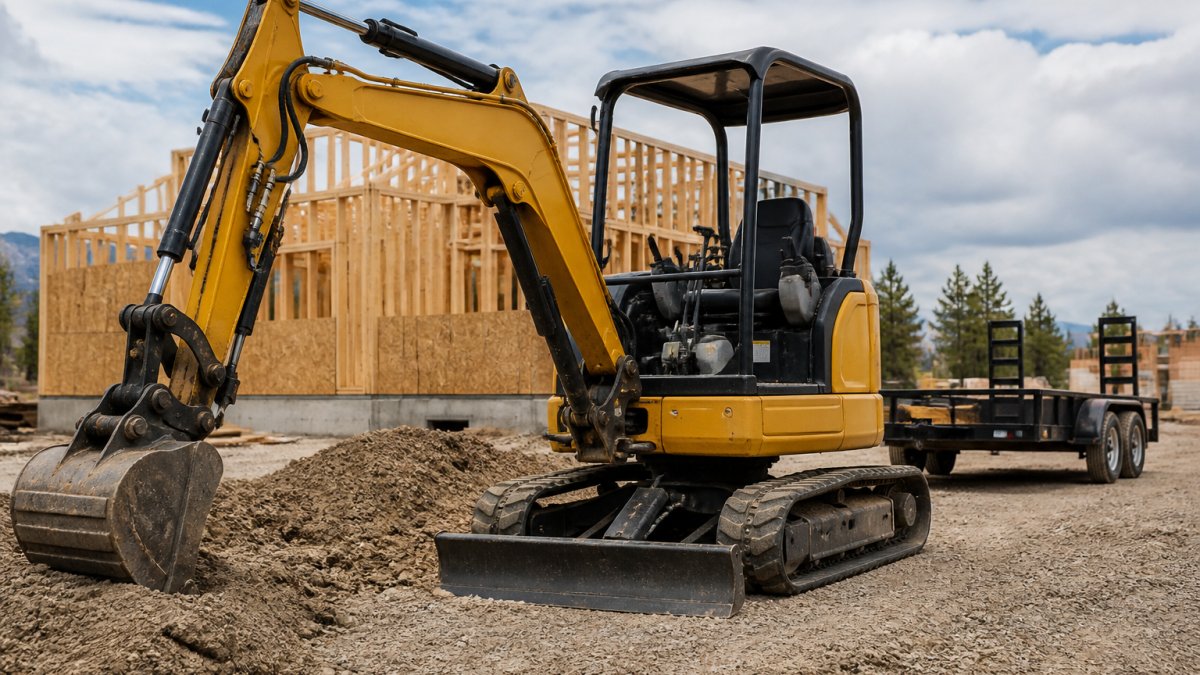
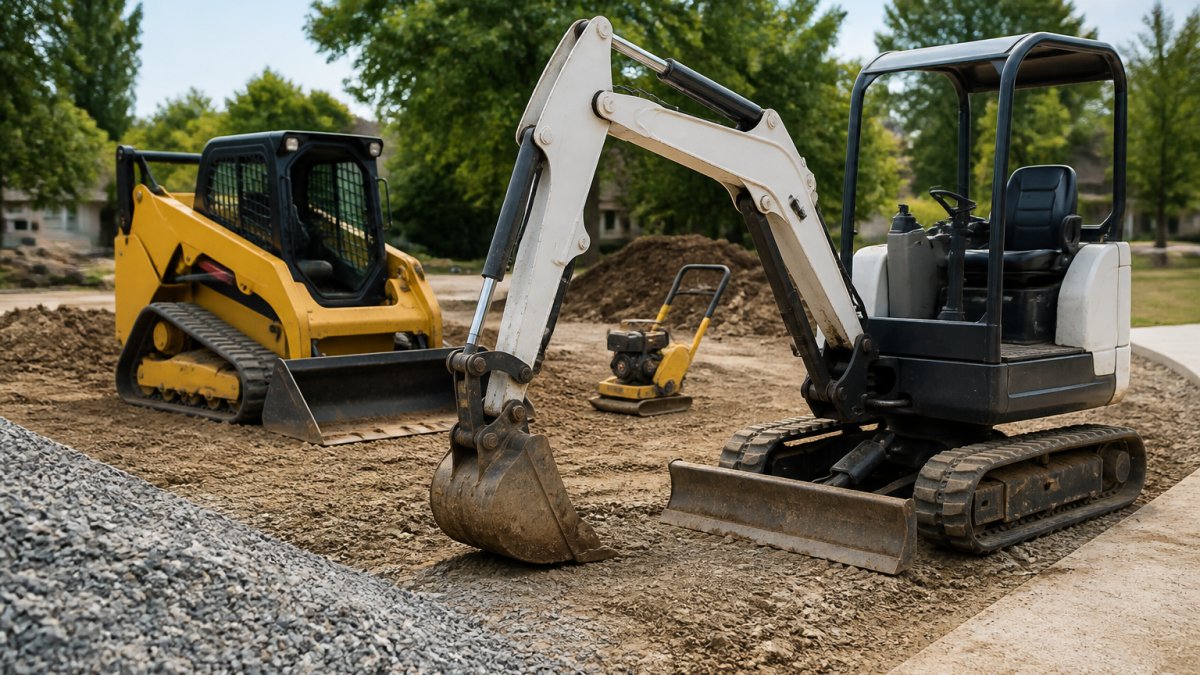
Excavators and loaders handle the dig-and-haul side of site preparation. An excavator digs below grade for footings, utilities, and retention, while a loader cycles material from a stockpile to the fill area. On most residential and light commercial jobs, a mini excavator paired with a skid steer loader covers both tasks.
Machine capacity is the number to check before you commit. Dig depth, reach, and bucket size determine whether an excavator can finish a trench in one pass or three. For landscaping and utility work, our buyer's guide to mini excavators for landscaping walks through the specifications that actually matter.
A common mistake is sizing the excavator to the biggest hole on the job and then paying for unused capacity all week. Match the machine to the typical task, not the exception.
Small Grading Equipment for Yards and Tight Sites
Small grading equipment wins on residential lots, tight side yards, and finished landscapes where a full-size machine cannot fit or would destroy the surface. A mini skid steer with a grading bucket, a compact tractor with a box blade, and a walk-behind grader each solve a different access problem. When a compact tractor is the right fit for a small property, matching its size and attachments to the grading work starts with the compact tractor buyer's guide.
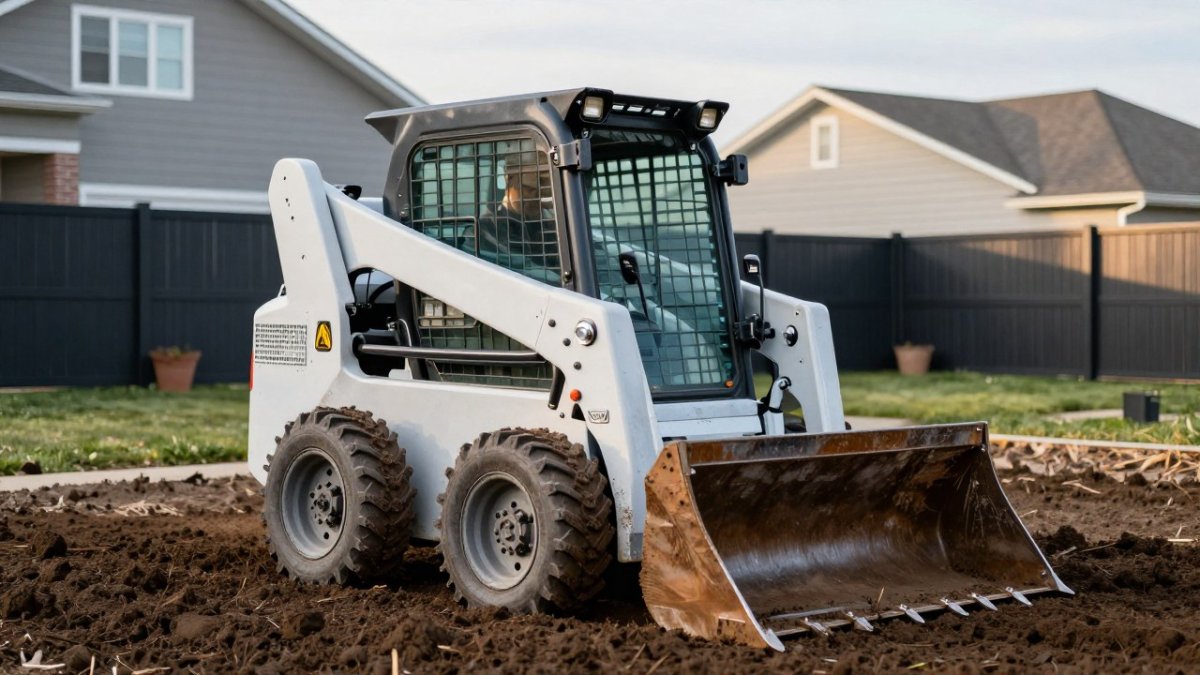
Choose by gate width and turning radius first. A machine that cannot pass the gate is not a solution. If you are weighing compact options, our guide on choosing the right skid steer for your job covers attachment compatibility and lift capacity in plain terms.
Small grading equipment also includes hand tools: a grading rake, a grading rod, and a laser level. Do not skip the rod. It is the cheapest way to confirm the machine actually hit the elevation you planned.
Land Grading Equipment for Drainage and Finish Work
Land grading equipment for drainage is judged by one outcome: does water leave the site in the direction and at the speed you designed? The tools that deliver that are a box blade for shaping swales and crowning, a grading blade for blending transitions, and a laser level for verifying slope.
Finish tolerance is the specification that separates rough work from finished work. Typical building pads call for a tolerance measured in fractions of a foot, and drainage swales need a consistent fall so water does not pond. A box blade with rippers loosens compacted soil before the final pass, which prevents the shallow layer of loose material that later settles and undoes your grade.
Check slope with a laser level or a grading rod at multiple points, not one. Ponding shows up at the low spot you did not measure.
Laser Grading Equipment for Precision Elevations
Laser grading equipment takes the guesswork out of elevation. A transmitter sets a reference plane, a receiver on the machine reads it, and the operator adjusts cut depth in real time. On fine-graded surfaces, laser grade control holds tolerance far more consistently than an operator's eye.
Two setups dominate: a laser level on a tripod for verification, and machine-mounted laser grade control for production work. The first is inexpensive and belongs on every job. The second pays for itself when the finish tolerance is tight and the area is large.
The practical limit is line of sight. Laser systems need a clear path between transmitter and receiver, so plan the setup before the machine arrives.
Small Grading Equipment Rental Versus Buying
Small grading equipment rental beats buying for most one-time and seasonal projects, but the decision should be made with a cost model, not a gut feeling. Build the comparison from four numbers: acquisition cost, transport, operating cost per hour, and utilization.
Acquisition and ownership. Add the purchase price, sales tax, insurance, storage, maintenance, and the resale value you will not recover. Depreciation is the largest hidden cost for a machine that sits idle most of the year.
Transport. A trailer, ramps, tie-downs, and a tow-rated vehicle are part of the cost of ownership.
Operating cost. Fuel, filters, teeth, cutting edges, and wear parts scale with hours. Track machines wear undercarriage; wheel machines wear tires. Ask the rental yard what is included in the rate and what is charged as a wear item.
Utilization. Count the hours the machine will actually run. A homeowner doing a single landscaping project may log 10 to 20 hours; a contractor running machines most weeks may log hundreds.
The result is the number of rental days per year at which ownership starts to pay. If your realistic use is below that number, rent.
If you decide to rent, our step-by-step guide to renting heavy equipment covers reservations and pickup, and our breakdown of avoiding hidden equipment rental fees explains the charges to ask about upfront. Here is whether renting equipment for landscaping projects is worth it.
Pricing and delivery depend on quantity, dates, and distance, so check current terms on the Diamond E Rental website or request a quote before you sign.
Rough Grading to Finish Grading: The Step-by-Step Workflow
Rough grading to finish grading is a sequence, and skipping steps is how sites fail inspection. Here is the workflow we would run on a typical pad.
- Locate utilities and confirm permits. Call 811 before any digging (811 Before You Dig). Confirm local permit and erosion control requirements in writing.
- Strip and stockpile topsoil. Keep it separate; you will need it for the finish layer.
- Establish elevations. Set benchmarks and verify them with a laser level.
- Rough grade. Cut high spots, fill low areas in lifts, and compact as you go.
- Verify drainage. Check swales and pad slope with a grading rod at multiple points.
- Finish grade. Bring in the grader or box blade and work to tolerance.
- Re-spread topsoil and stabilize. Seed or cover disturbed areas to control runoff.
Watch out: filling low areas in one deep lift instead of compacted layers leaves soft spots that settle after the concrete is poured.
Grading a site without the right machine means paying twice: once for the rental you outgrew and again for the one that finishes the job. Diamond E Rental carries mini excavators, bulldozers, and skid steers from trusted brands, with delivery available on all equipment across the Brazos Valley and a physical location at Knuckleheads Hardware. Tell us your site size and finish tolerance, and we will help you match the machine. Get started with Diamond E Rental and grade it right the first time.
Frequently Asked Questions
What equipment is best for grading a yard?
For most residential yards, a compact skid steer or mini excavator with a grading bucket handles the work. A skid steer is the better pick for spreading topsoil and finish grading on relatively flat ground, while a mini excavator digs and moves soil faster on uneven lots. For fine precision, add a laser level or grading rod. Small grading equipment rental lets you try the right machine without committing to a purchase.
When should I use a bulldozer instead of a skid steer for grading?
A bulldozer makes sense on large sites where you need to move hundreds of cubic yards, clear brush, or cut into a slope. Its tracks and blade push big loads efficiently. A skid steer is better for tight spaces, finish grading, and spreading material around structures. On sites under about half an acre, a skid steer usually finishes the job faster and with less cleanup.
Can a mini excavator be used for site grading?
Yes. A mini excavator with a grading bucket and a laser receiver can cut and shape a site with good accuracy, especially where you need to dig down rather than push material. It excels at trenching, cutting swales, and shaping slopes. Pair it with a skid steer for spreading and smoothing, and you cover both rough and finish grading with two compact machines.
What equipment is needed for laser grading?
Laser grading equipment pairs a rotating laser transmitter with a receiver mounted on the machine or a grading rod. On a skid steer or compact tractor, a laser-controlled box blade or grading blade adjusts automatically to hold grade. For hand work, a laser level and grading rod let you check elevations as you go. The setup gives you consistent finish tolerance across a large area.
How much does it cost to grade a 1 acre lot?
Pricing depends on site conditions, soil, access, and how much cut and fill is needed, so get a quote for your specific lot. Pricing depends on quantity, dates, and delivery distance. Check Diamond E Rental's website or request a quote for current rates.
What is the best small machine to level ground?
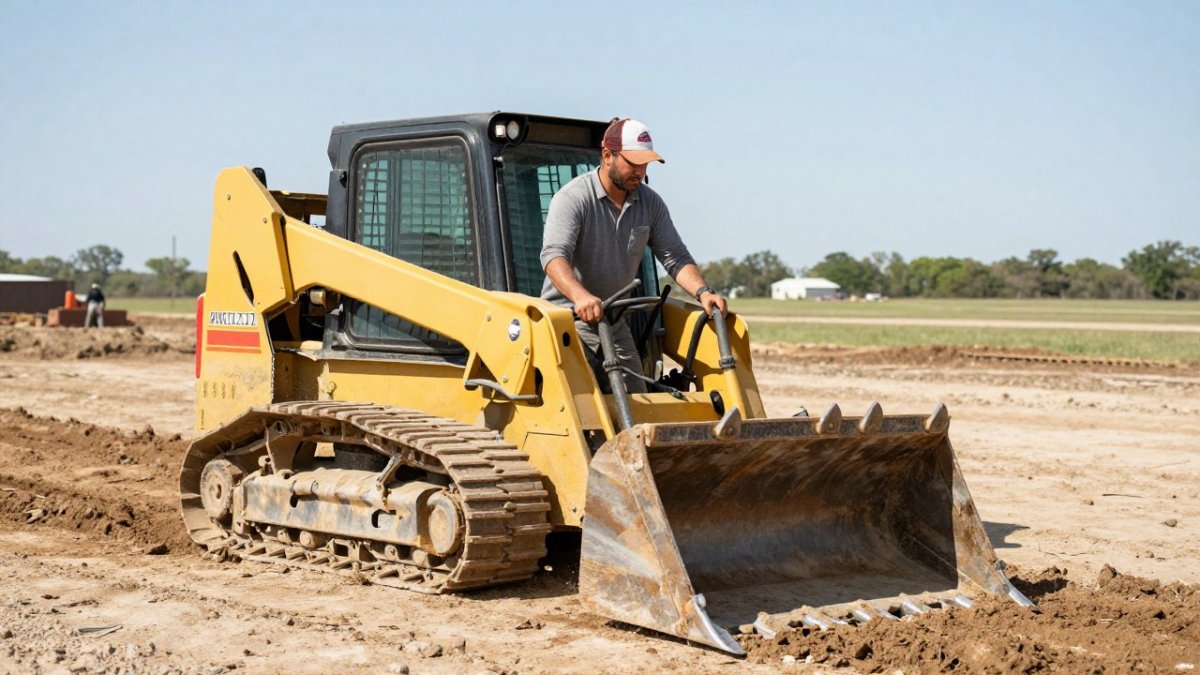
A compact track loader or skid steer with a box blade or grading bucket is the most versatile small machine for leveling ground. It fits through gates, turns in tight yards, and handles both spreading and smoothing. For tighter spots or deeper cuts, a mini excavator works well. Small grading equipment rental lets you match the machine to the job without buying.