 Ultimate guide
How Do Beginners Rent Heavy Machinery Safely?
Last Updated: November 14, 2026
Quick Summary
Heavy machinery rental for beginners starts with four things: a clear scope of work, the right machine class, a verified site access plan, and a rental agreement you have actually read. Match the smallest machine that finishes the job safely to the material, access, and depth required. Then confirm delivery, safety training, and damage terms before signing.
- Write down the job, footprint, timeline, and truck access before calling a rental yard.
- Mini excavators, typically 3 to 6 tons, fit through residential gates for landscaping and trenching.
- Price the weekly rate before committing to four or more days of rental.
- Walk the site, mark utility lines, and read the operator manual before starting the machine.
- Photograph the machine at pickup and return, including the hour meter and fuel level.
Table of Contents
- What Do I Need to Rent Heavy Equipment?
- Choosing the Right Machine for Your Project
- Front Loader Rental: What It Does and When to Choose One
- Heavy Equipment Rental Cost: What Drives Your Total
- Heavy Equipment Delivery and Pickup: How It Works
- Operating Safety and Training for First-Time Renters
- Rental Terms, Insurance, and Damage Responsibility
- Book Your Heavy Machinery Rental with Diamond E Rental
- Frequently Asked Questions
What Do I Need to Rent Heavy Equipment?
Heavy machinery rental for beginners starts with four things: a clear scope of work, the right machine class, a verified site access plan, and a rental agreement you have actually read. According to IBISWorld's heavy equipment rental industry analysis, U.S. heavy equipment rental revenue is projected to reach $57.2 billion in 2026, and rental penetration hit a record 57% in 2024 per Volvo Construction Equipment citing the American Rental Association. Translation: you are not the only first-timer walking into a rental yard this year.
At Diamond E Rental, located inside Knuckleheads Hardware, we are glad to help beginners work through this sequence before they rent.
Before you call anyone, write down four answers: what the job is, how big the footprint is, how many days it takes, and how a truck gets to the work area. Most beginner mistakes trace back to skipping that last one.
If you want the full process laid out end to end, our step-by-step heavy equipment rental guide walks through booking, inspection, and return in order.
Choosing the Right Machine for Your Project
Machine selection is a matching exercise, not a shopping exercise. Match the machine to the material, the access, and the depth or height required, and the rental almost runs itself.
Start With the Job, Not the Machine
Work through four questions in order before you look at inventory:
- What is the material? Soil, gravel, asphalt, concrete, brush, and snow behave differently. Digging compacted clay calls for a different bucket and machine weight than moving loose topsoil.
- What is the footprint? Measure the narrowest gate, the driveway width, and the overhead clearance. A machine that cannot reach the work area is the most common first-rental mistake.
- What is the depth or height? Trench depth, dig depth, and lift height set the minimum machine class. Add a margin, running a machine at its rated limit all day is hard on the equipment and the operator.
- How long is the job? A two-hour task and a two-week task justify different machine classes and different rental tiers.
Match Common First Projects to Machine Classes
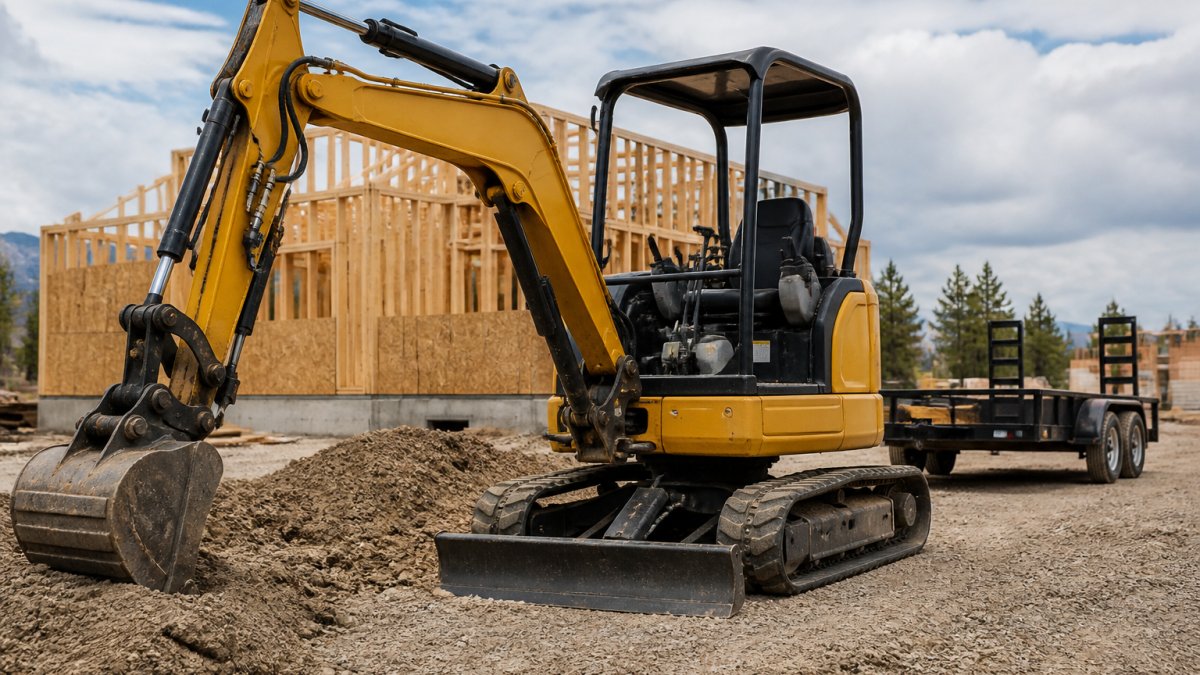
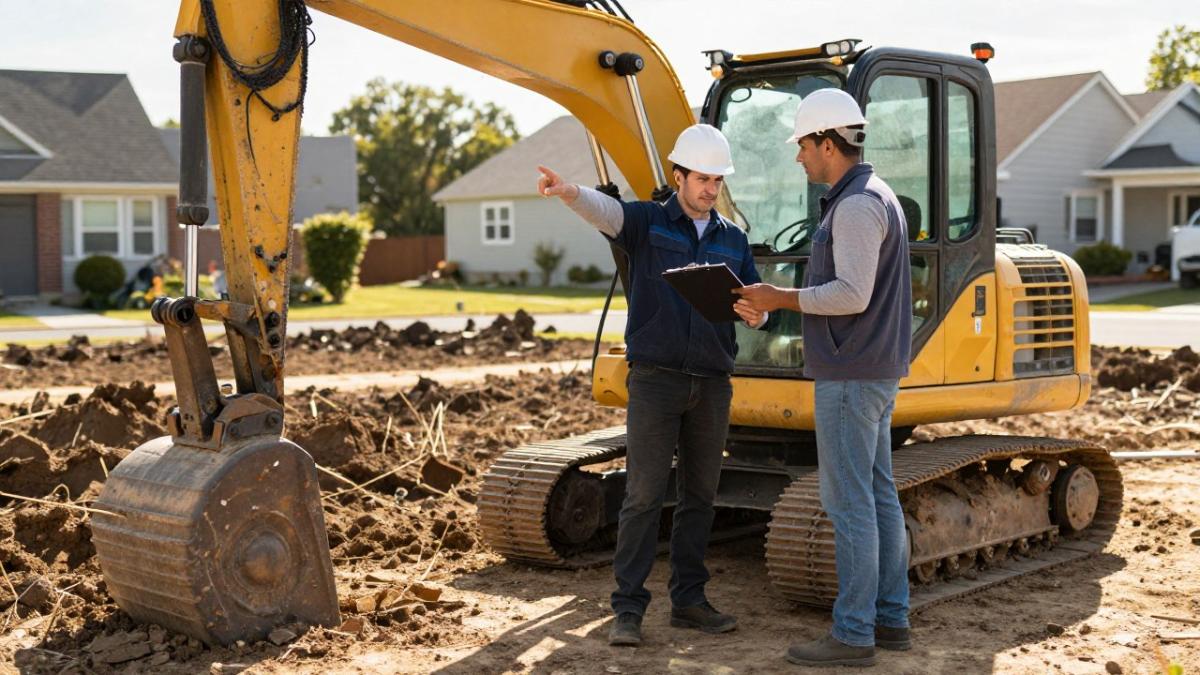
- Landscaping beds, small stumps, and utility trenching in a backyard: a mini excavator is commonly used for this work because it fits through residential gates and handles tight swing areas.
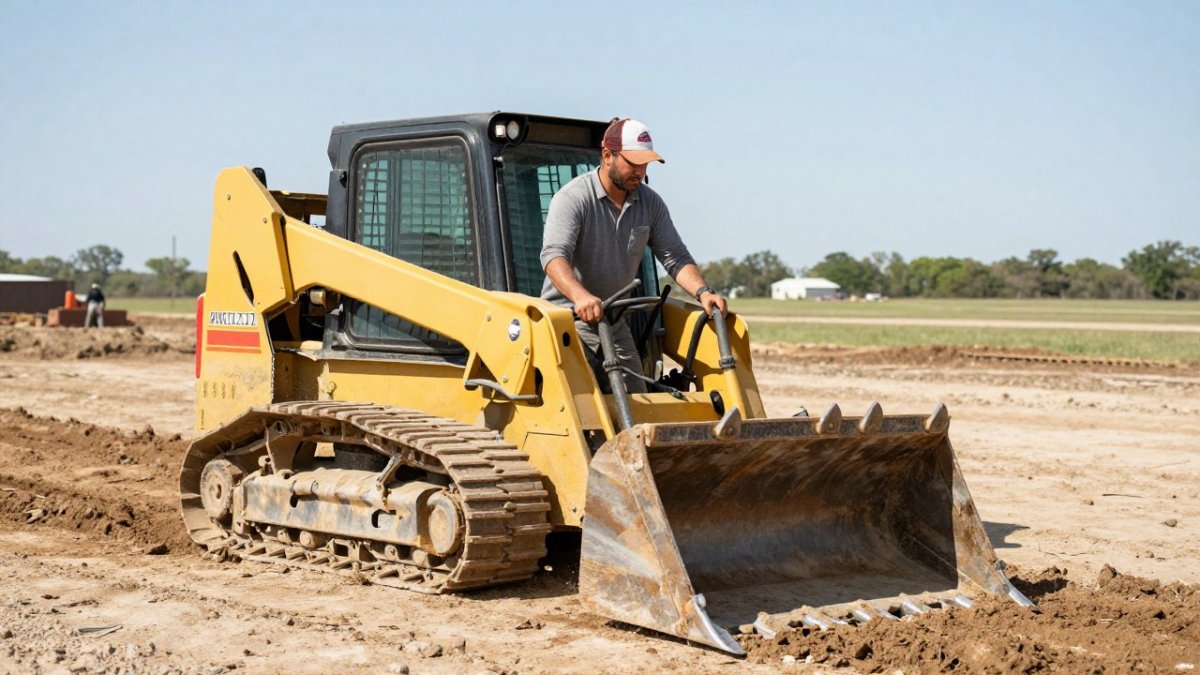
- Grading a gravel driveway, spreading base material, or clearing snow: skid steer with a bucket or blade. Its zero-tail-swing and tight turning radius suit compact lots.
- Loading trucks, stockpiling, and moving large volumes on open ground: front loader or telehandler, where reach and bucket capacity matter more than agility.
Sizing Trade-Offs Beginners Should Know
Bigger is not automatically better. A larger machine costs more per day, needs a wider transport trailer, requires more overhead clearance, and compacts soil more aggressively, which can be a problem over septic lines, utilities, or finished turf.
Watch out: renting a machine at the top of its rated capacity for the whole job leaves no margin for wet ground, unexpected roots, or operator error, size up one class only when the site and transport plan support it.
Attachments Change the Answer
A skid steer with a bucket, auger, breaker, and grapple can replace two or three single-purpose machines on a compact site. Ask the rental counter which attachments are compatible with the machine class you are considering, and bundle them into one reservation so you are not making a second trip. For a deeper walkthrough on sizing and transport, our beginner's guide to mini excavator rental covers the details.
Excavators and Mini Excavators
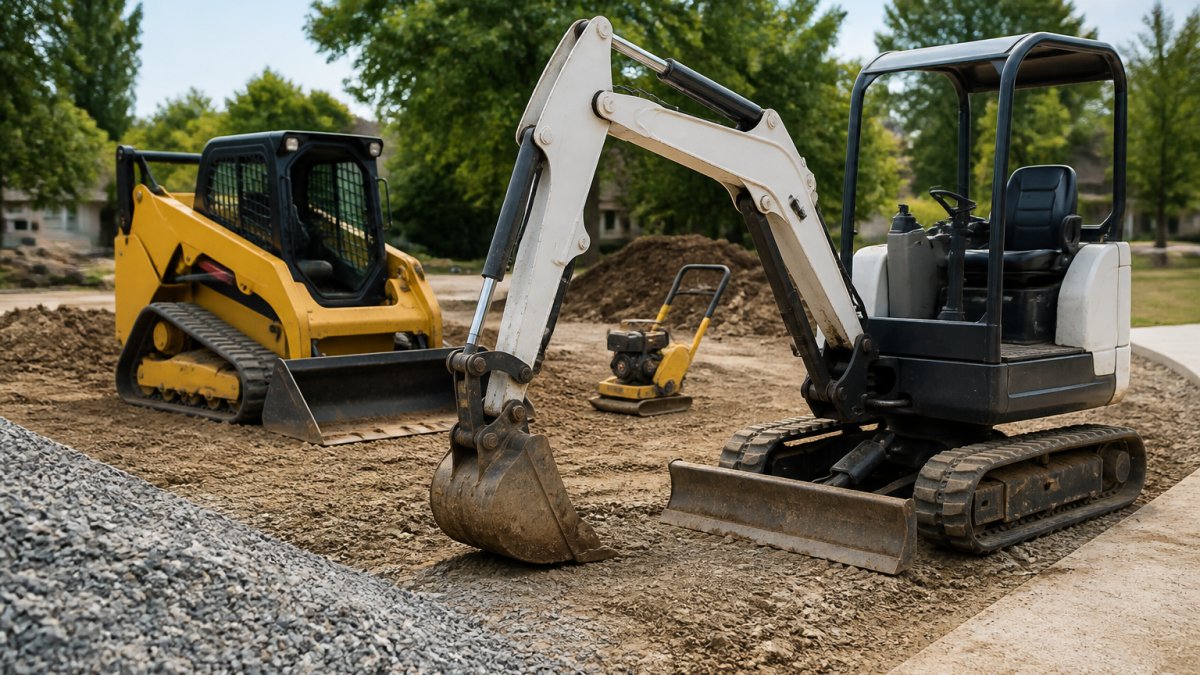
Excavators dig, trench, and move earth with a boom and bucket. Mini excavators, typically in the 3 to 6 ton class, fit through residential gates and handle landscaping, utility trenching, and small demolition.
Skid Steers and Front Loaders
Skid steers turn in their own footprint and can run a wide range of attachments, which makes them a versatile choice for compact sites. Front loaders trade agility for reach and bucket capacity, so they suit grading, stockpiling, and loading trucks on open ground.
Lifts, Telehandlers, and Compactors
Boom lifts and scissor lifts put people at height; telehandlers put material at height. Compactors, from plate compactors to ride-on rollers, handle soil and asphalt density. Pick by task, then confirm the machine fits the space.
Front Loader Rental: What It Does and When to Choose One
Front loader rental makes sense when the job is about volume and reach rather than precision digging.
Choose one when your site has room to maneuver and your work is horizontal: spreading base material, moving spoils, or feeding a dump truck.
One insider note: bucket capacity matters more than engine size for most beginner jobs. Oversized buckets on soft ground just dig you into ruts.
Heavy Equipment Rental Cost: What Drives Your Total
Heavy equipment rental cost is driven by machine class, rental duration, delivery distance, attachments, and damage or cleaning charges, not by a single headline rate. Because weekly and monthly rates can lower the effective daily cost, compare the full hire period alongside delivery, attachments, and potential cleaning charges when planning machinery rental with MarKay Outdoors.
| Cost Factor | What Moves It | Beginner Tip |
|---|---|---|
| Machine class | Size and capacity | Rent the smallest machine that finishes the job |
| Rental duration | Hourly, daily, weekly, monthly tiers | Price the weekly rate before committing to 4+ days |
| Delivery distance | Miles from the yard | Ask for the delivery quote in writing |
| Attachments | Buckets, augers, breakers | Bundle attachments into one reservation |
| Damage and cleaning | Condition at return | Photograph the machine at pickup and return |
Rates vary by provider and machine condition, so confirm your total before signing. Our 2026 guide to avoiding hidden rental fees flags the charges beginners most often miss.
Heavy Equipment Delivery and Pickup: How It Works
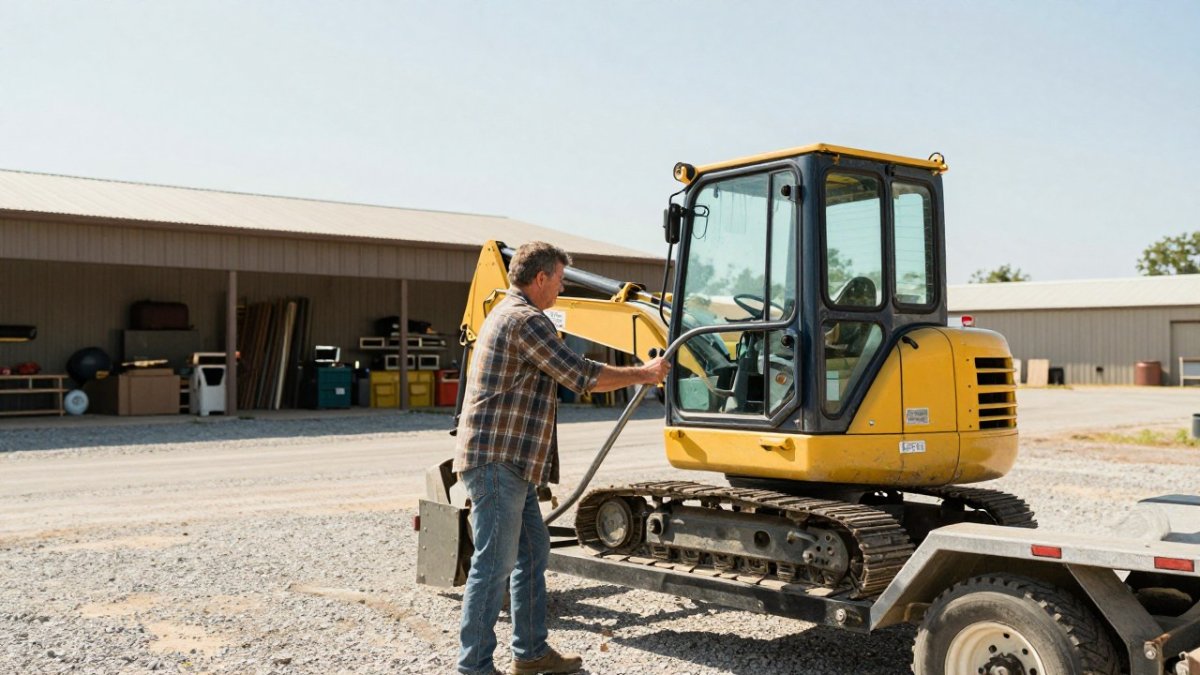
Heavy equipment delivery and pickup moves the machine from the yard to your jobsite on a trailer, then back again when the rental ends. Delivery is priced based on distance, and scheduling can be arranged around your start time.
Confirm three things: the drop-off window, whether the driver can position the machine at the work area or only at the curb, and who is responsible for loading on return. If your site has a gate, low wires, or a soft driveway, say so when booking.
Comparing delivery choices? Our breakdown of heavy machinery delivery service options lays out what each arrangement includes.
Operating Safety and Training for First-Time Renters
Operating safety for first-time renters comes down to three habits: read the operator manual, walk the site before starting, and never exceed the machine's rated capacity. Most incidents on small jobsites involve slope, overhead lines, or an operator unfamiliar with the controls.
- Walk the site and mark utility lines before the machine arrives
- Confirm the operator manual is in the cab and read the controls section
- Check the load chart for lifts and the depth rating for digging
If you are tackling a home project, our guide to renting construction equipment for DIY projects covers safe operation for non-professionals. When in doubt, ask about an operator-assisted rental instead of going solo.
Rental Terms, Insurance, and Damage Responsibility
Rental terms, insurance, and damage responsibility decide who pays when something breaks, and beginners routinely sign without reading that section. The rental agreement is a contract, not a receipt, the deposit, waiver, breakdown, and return-condition clauses are where first-time renters get surprised.
Deposits and Payment Holds
Ask at booking whether a security deposit or payment authorization hold is required, and when it would be released after return. Ask at booking: how much is the hold, is it a charge or an authorization, and when is it released? A hold that ties up your available credit can affect what else you can rent that week.
Damage Waivers: What They Cover and What They Do Not
Ask the rental counter directly what any damage waiver covers and excludes, and what your maximum out-of-pocket would be if the machine is damaged. Read the rental agreement's damage terms before you sign.
Insurance Requirements
Insurance requirements can vary by machine and rental arrangement. Confirm any requirement when you reserve, not when the trailer arrives.
Breakdowns and Mechanical Failure
If a machine fails, ask at booking who to call, what the response time is, and whether the rental clock stops while the machine is down. Keep the machine as-is, do not attempt repairs yourself, and document the failure with photos and a call log. Continuing to operate a machine with a known hydraulic leak or unusual noise can shift responsibility to you.
Return Condition and Cleaning Standards
Rental agreements generally require the machine to be returned in the same condition as rented, minus normal wear. Ask about cleaning expectations before you take the machine. Photograph the machine at pickup and at return, including the hour meter, fuel level, and any pre-existing damage noted on the inspection sheet.
Watch out: a dirty machine or a missing attachment can trigger a fee, so confirm the return standard in writing at pickup.
Extensions, Late Returns, and Overtime
Ask at booking about extension and late-return terms, including any extension rate, so you are not guessing later. Set a reminder for your return window.
What Renters Are Responsible For
In general, the renter is responsible for the machine from pickup to return, including fuel, fluids, security on the jobsite, and damage caused by misuse or operation outside the manual. The provider is responsible for mechanical fitness at delivery and for covered breakdowns. Read those two clauses side by side before you sign, and ask the counter to point to the exact language.
Book Your Heavy Machinery Rental with Diamond E Rental
The gap between a smooth first rental and a stressful one is preparation.
Diamond E Rental serves contractors, landscapers, homeowners, and agricultural operators across the Brazos Valley from our location at Knuckleheads Hardware.
Your project has a deadline and a budget, and the wrong machine costs you both. Get started with Diamond E Rental and reserve the right equipment with delivery scheduled around your start date.
Frequently Asked Questions
How much does heavy machinery rental cost for a beginner?
Heavy equipment rental cost depends on the machine, rental duration, and delivery distance. Rental cost depends on quantity, dates, and delivery, and longer rental periods are typically priced differently from daily rates. Ask for a written quote that separates the daily, weekly, or monthly rate from delivery, fuel, and damage waiver charges so you can compare the real total before booking.
What do I need to rent heavy equipment as a first-timer?
Rental requirements can include identification, proof of age, a payment method, and sometimes proof of insurance, so ask what applies to your rental. You will also need a clear project description, a confirmed jobsite address with access details, and a plan for the equipment's delivery and pickup. Call ahead to confirm availability and ask what the provider requires so there are no surprises on pickup day.
Can I rent heavy machinery without a license?
In most cases you do not need a special operator's license to rent and run equipment like a mini excavator or skid steer on private property, but the rental agreement still makes you responsible for safe operation. Some machines or jobsites may require certifications, and public road use has its own rules. Ask the rental coordinator what is required for your specific machine and site, and never operate equipment you have not been trained on.
How does heavy equipment delivery and pickup work?
Heavy equipment delivery and pickup usually means the provider loads the machine on a trailer, hauls it to your jobsite, and unloads it at a scheduled time, then returns to collect it when your rental ends. Delivery fees are often based on distance from the rental location, so confirm the cost and the window upfront. Clear the access path, mark underground utilities, and have someone on site to receive the machine so the drop-off goes smoothly.
What should I check before operating rented heavy machinery?
Walk around the machine before you start it: check fluid levels, tires or tracks, hydraulic hoses, and safety decals, and confirm the parking brake and controls work. Read the operator's manual or ask for a quick walkthrough from the rental coordinator. Wear the required personal protective equipment, keep bystanders clear of the swing radius, and stop immediately if you notice a leak, strange noise, or control problem, then call the provider.