 blog
Best Mini Excavator for Landscaping: 2026 Buyer's Guide
Table of Contents
- What Makes the Best Mini Excavator for Landscaping
- Mini Excavator Size for Landscaping: Matching Machine to Job
- Mini Excavator vs Skid Steer: Which Is Better for Landscaping?
- Mini Excavator Attachments for Landscaping Tasks
- Mini Excavator Rental for Landscaping: Costs and Logistics
- Transport, Site Access, and Total Cost of Ownership
- Conclusion
- Frequently Asked Questions
Last Updated: October 19, 2026
What Makes the Best Mini Excavator for Landscaping
The best mini excavator for landscaping is the smallest machine that still completes your digging, trenching, and grading without damaging finished turf or getting stuck at a gate.
Size, track type, and hydraulic flow decide most of it. Engine power matters less than most buyers think.
Below: how to match specs to jobs, which attachments earn their keep, and what rental costs once delivery and fuel are counted.
Mini Excavator Size for Landscaping: Matching Machine to Job
Mini excavator size for landscaping is best judged by operating weight and digging depth, not the brochure. A 1-ton micro handles planting beds and tight trenching; a 3- to 4-ton compact handles drainage runs, stump removal, and small site prep.
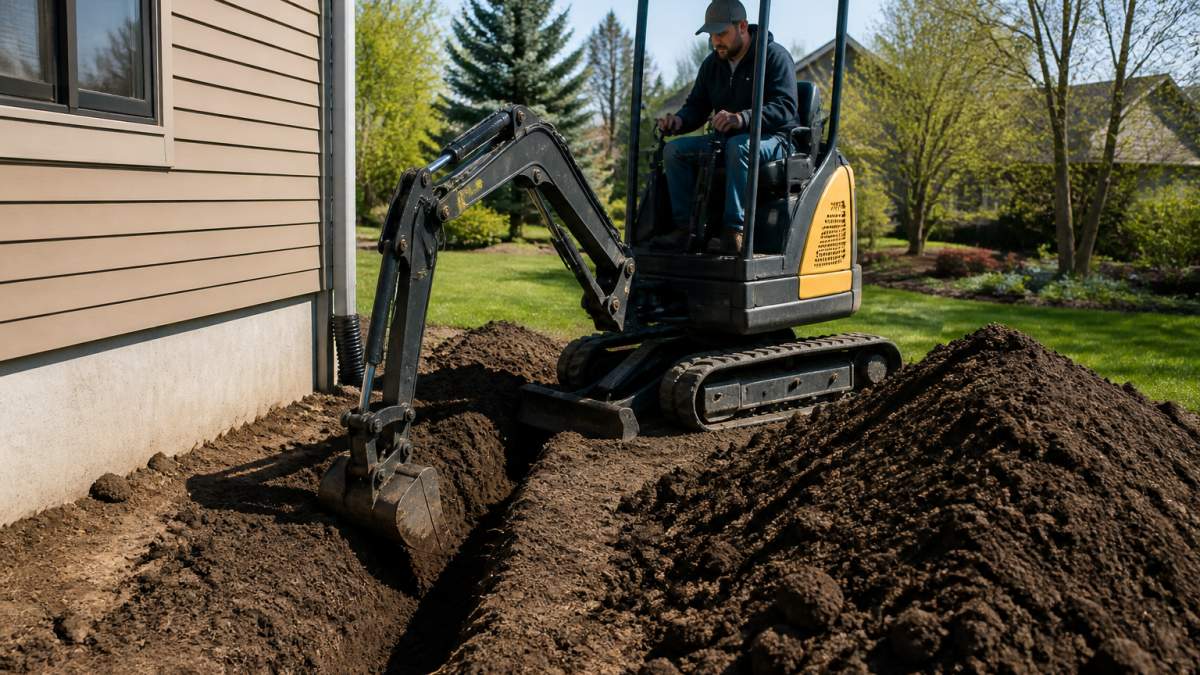
Most landscaping work falls into the 1- to 4-ton class. Above that, you're in construction territory, and the machine stops fitting through gates.
Operating Weight and Digging Depth by Project Type
Match the machine to the job before you reserve anything:
| Project | Operating Weight | Digging Depth | Why It Fits |
|---|---|---|---|
| Planting beds, edging | 0.8-1.5 tons | Up to 5 ft | Fits through narrow gates, low ground pressure |
| French drains, downspout lines | 1.5-2.5 tons | 4-6 ft | Enough reach for gravel-filled trenches |
| Tree and stump removal | 2.5-4 tons | 6-9 ft | Needs lift capacity and a thumb |
| Small site prep, grading | 3-4 tons | 7-10 ft | Stability for bucket work on uneven ground |
| Pond, retaining wall footings | 4-5 tons | 9-12 ft | Reach and breakout force for compacted soil |
A common mistake is renting by digging depth alone. A machine that reaches 8 feet but weighs 5 tons may not fit beside a house.
Ground Pressure and Turf Protection
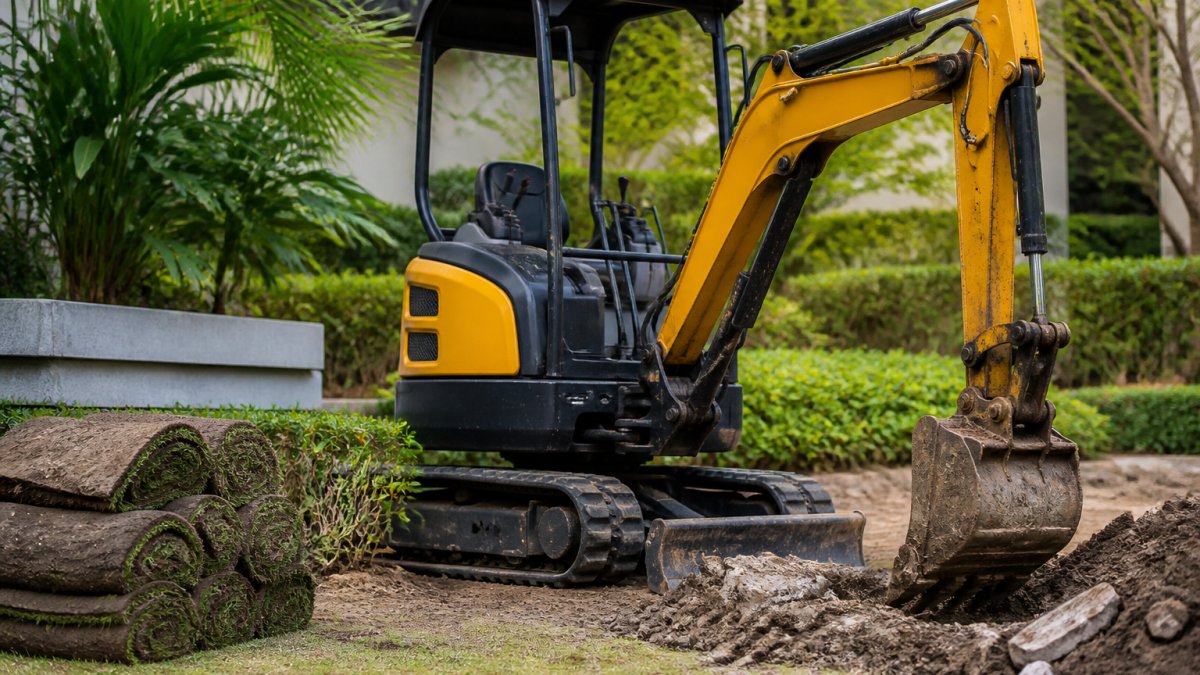
Ground pressure is the number that saves your client's lawn. Rubber tracks spread weight over more surface area than steel, so a light machine on wide rubber tracks crosses established turf with minimal rutting.
Three practical rules for renters:
- Choose rubber tracks over steel for any finished landscape.
- Use plywood track mats on turns and soft ground; turning causes more damage than driving straight.
- Keep the bucket loaded low and travel slowly on slopes.
Track width also matters. Narrow tracks fit gates; wider tracks float better on soft soil. You rarely get both, so decide which constraint is real on your site.
Mini Excavator vs Skid Steer: Which Is Better for Landscaping?
A mini excavator wins for digging, trenching, and stump work; a skid steer wins for grading, hauling, and spreading material. Many landscaping crews run both, the useful question is which machine matches the physics of your job.
Digging: Why the Excavator Wins at Depth
An excavator's boom and arm generate far more breakout force at depth than a skid steer attachment, and it digs straight down without repositioning.
For a French drain or downspout line, that difference shows up in cycle time and trench quality. A skid steer trencher cuts a fast, narrow slot in open ground but struggles to lift spoil clear and can't reach beside a foundation without tracking over the bed.
Material Handling: Why the Skid Steer Wins on Volume
Skid steers carry material. For moving 20 yards of topsoil, spreading gravel, or grading a pad, the skid steer is right because it combines bucket, dump height, and travel speed in one chassis.
A common pattern on residential jobs is to use the excavator for the cut and the skid steer for the fill. That pairing is why many landscapers own one of each rather than a single larger machine.
A Practical Decision Framework
Use these thresholds to choose before you reserve:
| Project profile | Better first machine | Why |
|---|---|---|
| Trenching, drainage, stump removal, footings | Mini excavator | Breakout force at depth, clean trench edges, no tracking over finished beds |
| Grading, spreading, hauling, site cleanup | Skid steer | Bucket capacity, dump height, travel speed |
| Mixed dig-and-fill under one day | Mini excavator plus wheelbarrow or dump trailer | Avoids a second rental and delivery fee |
| Mixed dig-and-fill over multiple days | Both machines | Each gets a full day of work |
| Tight gate, finished turf, overhead obstacles | Mini excavator | Smaller footprint, lower ground pressure, no tail swing on zero-tail models |
The Attachment Economics
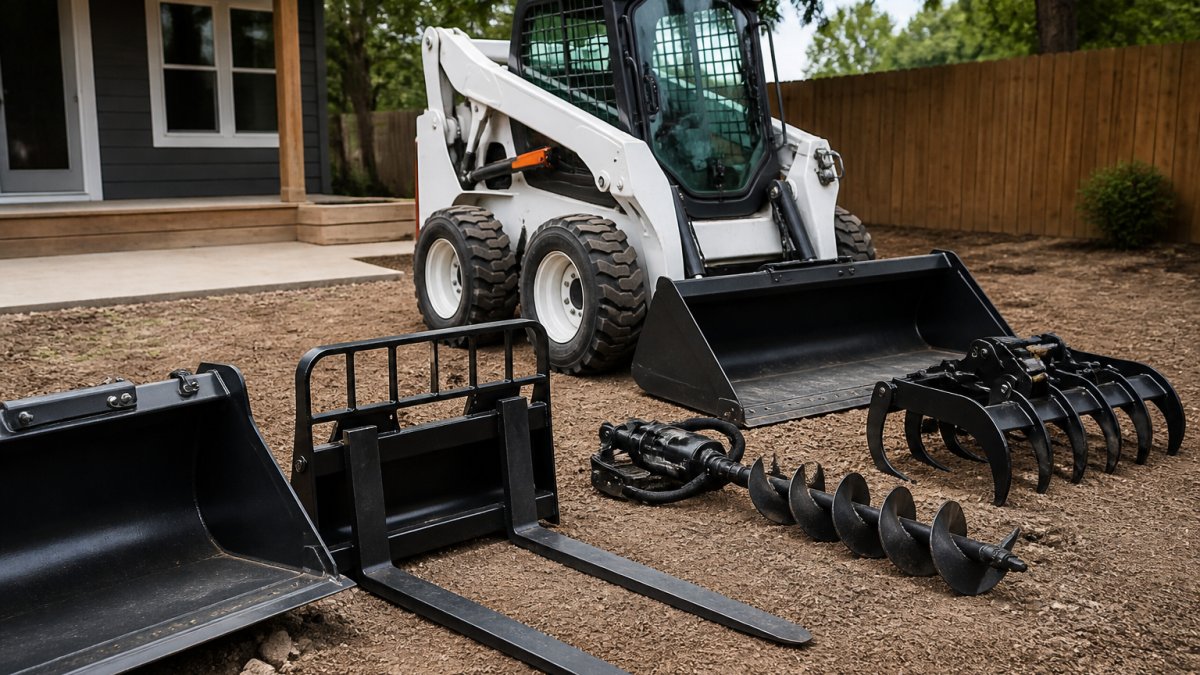
A skid steer's versatility comes from its attachment ecosystem, and so does its cost: a trencher, auger, breaker, or grading bucket is a separate line item, and each adds setup time.
Before you rent either machine, confirm the attachment you need is available for the size class you are booking. A breaker rated for a 3-ton excavator will not mount on a 1-ton micro, and a skid steer trencher sized for a large frame machine will not fit a compact track loader.
What About Compact Track Loaders?
A compact track loader sits between the two: skid steer material handling with rubber tracks that reduce ground pressure, making it a better fit for finished landscapes than a wheeled skid steer. It still can't match an excavator's digging depth or breakout force, so choose by the dominant task, not the attachment catalog.
Mini Excavator Attachments for Landscaping Tasks
Mini excavator attachments for landscaping turn one machine into several tools, and auxiliary hydraulics make that possible. Before you rent, confirm the machine has an auxiliary circuit and check its hydraulic flow rate, since attachments are rated to specific flow ranges.
The core landscaping attachments:
- Buckets: digging, trenching, and grading; a smooth-edged grading bucket leaves a cleaner finish than a toothed digging bucket.
- Thumb attachment: grips logs, rocks, and stumps for removal without switching tools.
- Auger: drills post holes and tree planting holes quickly.
Attachment Recommendations by Landscaping Job
| Job | Primary Attachment | Secondary | Notes |
|---|---|---|---|
| Drainage trench | Narrow trenching bucket | Thumb | Keep trench width tight to reduce gravel use |
| Tree stump removal | Digging bucket | Thumb, ripper | Thumb is essential for lifting root balls |
| Fence and deck posts | Auger | Bucket | Match auger size to post diameter |
| Grading and bed prep | Smooth grading bucket | Ripper | Rip compacted soil first, then grade |
| Rock and concrete removal | Hydraulic breaker | Bucket | Confirm breaker flow rating matches machine |
Mini Excavator Rental for Landscaping: Costs and Logistics
Mini excavator rental for landscaping is usually smarter for one-time projects, since purchase price plus maintenance, insurance, and storage rarely pays back on a single job. Pricing depends on machine size, rental length, and delivery distance, so ask for a full quote rather than a day rate.
What to confirm before you book:
- Delivery and pickup fees: ask whether they're included or charged by distance.
- Fuel policy: know whether you return it full or pay a refueling charge.
- Damage terms: ask exactly what counts as normal wear.
- Extension policy: confirm the rate if your project runs long.
Transport, Site Access, and Total Cost of Ownership
Transport and site access decide whether a machine is usable before specs matter. Most landscaping excavator disappointments trace back to a machine that couldn't fit through the gate or be legally towed, not one that dug too slowly.
Site Access: Measure Before You Reserve
Walk the machine's route and measure the three constraints that eliminate machines fastest:
- Gate and path width. A 36-inch gate is the common residential threshold. A 1-ton micro excavator with a retracted track width in the low 30s of inches fits; most 2-ton and larger machines do not. Measure the narrowest point, including downspouts, hose bibs, and fence posts that narrow the opening.
- Overhead clearance. Low tree limbs, pergolas, and utility drops limit boom height. A machine that fits the gate may still not raise its boom under a canopy.
- Ground conditions along the route. A tracked machine crossing a finished lawn leaves ruts on turns even when it travels straight without damage. Plan the route over plywood mats or existing hardscape.
Also confirm tail swing. A conventional tail-swing excavator rotates its counterweight beyond the track footprint, a problem beside fences, walls, and foundations. A zero-tail-swing model keeps the counterweight within the track width and is safer for tight residential work.
Trailer Capacity and Towing
A 3-ton excavator typically needs a trailer and properly rated tow vehicle, which is why delivery often beats hauling it yourself. Check these numbers:
- Trailer gross vehicle weight rating (GVWR) must exceed the machine's operating weight plus the trailer's own weight plus attachments and fuel.
- Tow vehicle rating must exceed the loaded trailer weight, and the hitch and ball must be rated for that load.
- Tie-down points on the machine and rated straps or chains are required; a bucket resting on the deck is not a tie-down.
If your tow vehicle is a half-ton pickup, a 1- to 2-ton machine on a single-axle or light tandem trailer is usually the practical ceiling. Above that, delivery is the lower-risk choice.
Total Cost of Ownership: Renting vs. Buying
Total cost of ownership for a rental is simpler than buying: rental rate, delivery, fuel, and any damage or cleaning charges. For a purchased machine, add insurance, maintenance, storage, trailer cost, and resale value.
Build the comparison on these line items rather than the sticker price:
| Cost line | Rent | Buy |
|---|---|---|
| Machine cost | Daily, weekly, or monthly rate | Purchase price or financing |
| Delivery and pickup | Often charged by distance | Trailer plus tow vehicle |
| Fuel | Refueling charge or return-full policy | Fuel plus storage |
| Maintenance and repairs | Included in rental | Filters, fluids, tracks, hydraulic service |
| Insurance | Often included or offered | Separate policy |
| Storage | None | Secure yard or shed |
| Attachments | Rented per job | Purchased per attachment |
| Resale | Not applicable | Recovers part of purchase price |
Break-even isn't a fixed number of days. It depends on how often you'll use the machine, whether you already own a trailer and tow vehicle, and whether you can do routine service.
Conclusion
Matching a machine to the job, the gate width, and the turf you're protecting is the whole game with landscaping excavators.
Diamond E Rental stocks mini excavators, skid steers, and bulldozers for contractors and homeowners across the Brazos Valley, with delivery available on all equipment based on distance.
Order online with Diamond E Rental and get the right machine on site without the guesswork.
Frequently Asked Questions
What size mini excavator is best for residential landscaping?
For most residential landscaping jobs, a 1- to 2-ton mini excavator is the sweet spot. Machines in this class typically have an operating weight around 1,700 to 4,000 pounds, dig 6 to 9 feet deep, and fit through a 36- to 48-inch gate. They handle trenching, drainage, small stump removal, and grading without tearing up established lawns. Larger 3- to 4-ton units suit bigger site prep but need wider access and may require turf protection.
Is a mini excavator or skid steer better for landscaping?
It depends on the task. A mini excavator wins for digging, trenching, drainage, stump removal, and precise grading because of its reach and articulation. A skid steer is better for material handling, spreading soil or gravel, and moving pallets. Many landscapers rent both for larger projects. If you can only choose one, pick the mini excavator when digging is the core job, and the skid steer when loading and hauling dominate.
What attachments are most useful for landscaping with a mini excavator?
The bucket is the workhorse, but adding a thumb turns the machine into a grabber for rocks, roots, and debris. An auger speeds fence-post and tree planting, a grading bucket smooths beds and paths, and a breaker handles small concrete or rock. Confirm your rental machine has auxiliary hydraulics with enough flow to run the attachment you need before you book.
How much does it cost to rent a mini excavator for landscaping?
Rental pricing depends on machine size, rental duration, delivery distance, and attachment needs, so it varies by provider and job site. Rather than quote a flat rate, ask for a written estimate that includes delivery, fuel, and any damage waiver. Confirm the daily and weekly rates and the policy for extending the rental if your project runs long. Diamond E Rental provides delivery based on distance and can quote current rates for your project.