 Ultimate guide
The Beginner's Guide to Mini Excavator Rental
Last Updated: October 25, 2026
Quick Summary
Mini excavator rental for beginners starts with choosing machine size: a 4,000 lb class handles tight residential access and digs around 7 to 8 feet, while an 8,000 lb machine suits heavier digging and site prep. Get daily, weekly, and monthly quotes, call 811 before digging, and confirm delivery timing in writing.
- A 4,000 lb mini excavator fits through a standard gate for fenced backyard work.
- Weekly rates almost always beat stacking daily rates on multi-day jobs.
- Ask for an itemized written quote covering delivery, damage waiver, fuel, attachments, and taxes.
- Call 811 for free underground utility marking before any excavation.
- Photograph the machine at drop-off and note existing wear on the contract.
Table of Contents
- Mini Excavator Sizes and Uses: Match the Machine to Your Job
- Mini Excavator Rental Cost: What Drives Your Total
- How to Operate a Mini Excavator on Your First Job
- Safety, Training, and Site Prep Before You Dig
- Delivery, Pickup, and Transport Logistics
- Your Mini Excavator Rental Checklist
- Reserve Your Mini Excavator for the Brazos Valley
- Frequently Asked Questions
Mini Excavator Sizes and Uses: Match the Machine to Your Job
Mini excavator rental for beginners starts with one decision: machine size. Pick too small and you'll fight weak hydraulics all day; pick too large and you'll tear up turf, struggle with transport, and pay for capacity you never use.
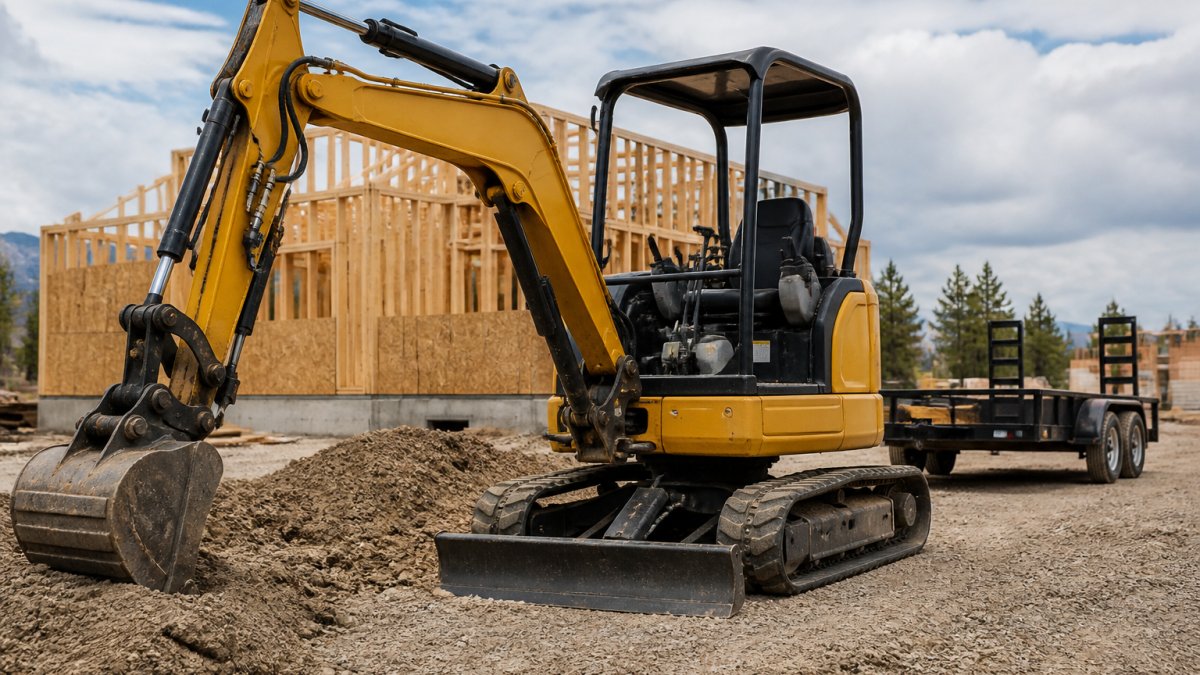
A mini excavator is a compact, track-mounted digging machine typically weighing between roughly 2,500 and 20,000 pounds, sized for residential and light commercial work where a full-size excavator won't fit. Rental providers list compact-track models across that full range, with daily, weekly, or monthly terms to match project length, according to EquipmentShare's compact equipment rental listings.
Most beginners fall into one of two jobs: trenching for utilities, irrigation, or drainage, or general digging and grading for landscaping and site prep. A 4,000 lb class machine handles both on residential lots. An 8,000 lb machine earns its keep when you're moving serious volume or digging in tight, heavy soil.
Reading Operating Weight: 4,000 lb vs 8,000 lb Machines
Operating weight tells you what a machine can actually do, not the model name.
Here's the practical split we use when advising renters:
- 4,000 lb class: fence lines, small trenches, stump removal, tight residential access
- 8,000 lb class: foundation digging, larger drainage runs, heavier material handling, commercial site prep
If you're still weighing models for a landscaping project, our Best Mini Excavator for Landscaping: 2026 Buyer's Guide breaks down which sizes suit which jobs. You can also browse the full excavator lineup to see the size range available.
Here's the practical split we use when advising first-time renters on machine size.
| Machine class | Best for | Dig depth and access |
|---|---|---|
| 4,000 lb class | Fence lines, small trenches, stump removal, tight residential access | Digs around 7 to 8 feet; fits through a standard gate |
| 8,000 lb class | Foundation digging, larger drainage runs, heavier material handling, commercial site prep | Digs deeper, lifts more; needs wider access and a beefier tow vehicle |
Mini Excavator Rental Cost: What Drives Your Total
Mini excavator rental cost depends on four things: machine size, rental duration, delivery distance, and attachments. Any provider quoting a number before asking about those four factors is guessing. And the base rate is only part of the bill, first-time renters are routinely surprised by add-ons at checkout or on the return receipt, so budget for the full total.
The biggest cost mistake first-time renters make is renting by the day for a job that will clearly run three or four days. Weekly rates almost always beat stacking daily rates, and monthly terms beat weekly ones on longer projects. Ask for all three quotes before you commit.
Daily, Weekly, and Monthly Rates
Rental rates scale down as the period lengthens. A day rental suits a quick trench or an afternoon of grading; a week fits most residential landscaping and utility jobs; a month makes sense for multi-phase site work or a contractor running several jobs back to back.
Pricing depends on availability and dates, so confirm current rates when you book rather than budgeting from an old quote.
Run the math on all three before you choose.
The Fees That Aren't in the Base Rate
The advertised rate is rarely the final number. Ask the rental provider to itemize these before you sign, because they vary by yard and by machine class:
- Delivery and pickup: Usually charged each way, based on round-trip distance from the yard to your site. A machine that arrives at noon on a day rental eats half your working time, so confirm the drop-off and pickup windows in writing.
- Fuel: Some providers rent with a full tank and require a full tank on return; others charge a refueling fee per gallon if you return it low. Ask which policy applies.
- Damage waiver: An optional per-day or per-rental charge that limits your liability for accidental damage. It is not insurance, and it typically excludes misuse, overturning, and tire or track damage from abuse. Read what it actually covers.
Budgeting for Your First Rental
To budget, add the base rate for your term, delivery both ways, the damage waiver if you take it, and a cushion for fuel and cleaning.
Watch out: damage charges and cleaning fees catch renters who skip the walkaround inspection. Photograph the machine before and after, and note existing wear on the contract. If the job runs long, ask about extending the rental before the term ends; rates typically stay reasonable when you extend in advance and jump when you go over without notice.
How to Operate a Mini Excavator on Your First Job
Operating a mini excavator on your first job comes down to three controls and one habit. The two joysticks run the boom, arm, bucket, and swing; the travel pedals or levers move the tracks. The habit: dig toward yourself, never sideways into a trench wall, and keep the machine on level ground.
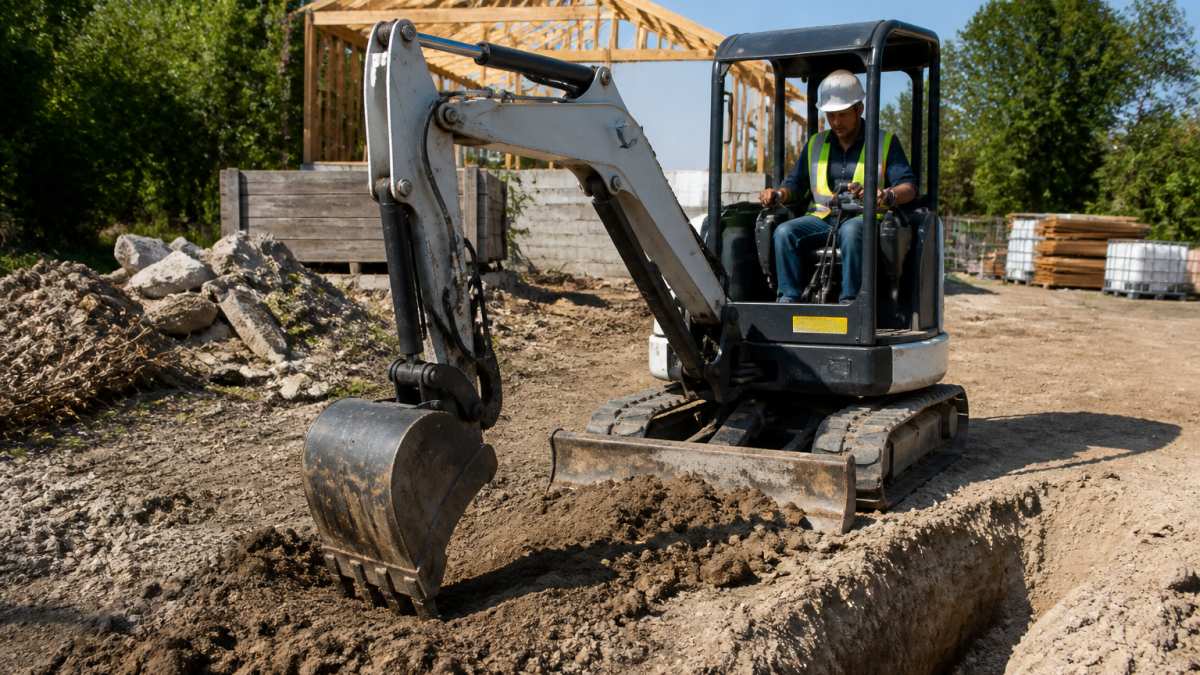
Before you touch a control, do a slow walkaround. Check the tracks for debris, confirm the bucket teeth are secure, and look for overhead power lines. Then run the machine through its full range of motion in an open area before you start digging.
Controls, Tracks, and Safe Digging
Most mini excavators use an ISO control pattern: left joystick controls swing and arm, right joystick controls boom and bucket.
Track operation is counterintuitive at first: push both levers forward to move forward, pull back to reverse, and use one lever at a time to turn.
A common mistake is digging with the bucket curled too far under, keep the teeth angled down and let the arm do the work.
A Safe Startup Sequence for Beginners
Run this sequence every time you climb in, not just the first time:
- Walkaround: Check tracks for debris, confirm bucket teeth and pins are secure, and look up for power lines before you start.
- Fluids and leaks: Check the engine oil, hydraulic fluid, and coolant if the provider's checklist calls for it, and look under the machine for fresh drips.
- Seat and seatbelt: Sit down, fasten the seatbelt, and lower the armrest or safety bar, most machines will not allow hydraulic function until the safety lockout is engaged.
- Pattern check: Confirm ISO or backhoe pattern on the selector and test each function slowly in open air.
- Warm-up: Let the machine idle and cycle the hydraulics gently for a minute before loading the bucket.
- Practice pass: Dig and dump one bucket in an open area before working near anything valuable.
Safety, Training, and Site Prep Before You Dig
Safety before you dig starts with a call, not a control.
Site prep matters just as much. Clear the work area of debris, mark your trench line with paint or stakes, and confirm the machine has a stable, level footprint.
Training is the part beginners underestimate. A mini excavator is not a lawn mower; it's a hydraulic machine that can crush a foot or tip on a slope.
Delivery, Pickup, and Transport Logistics
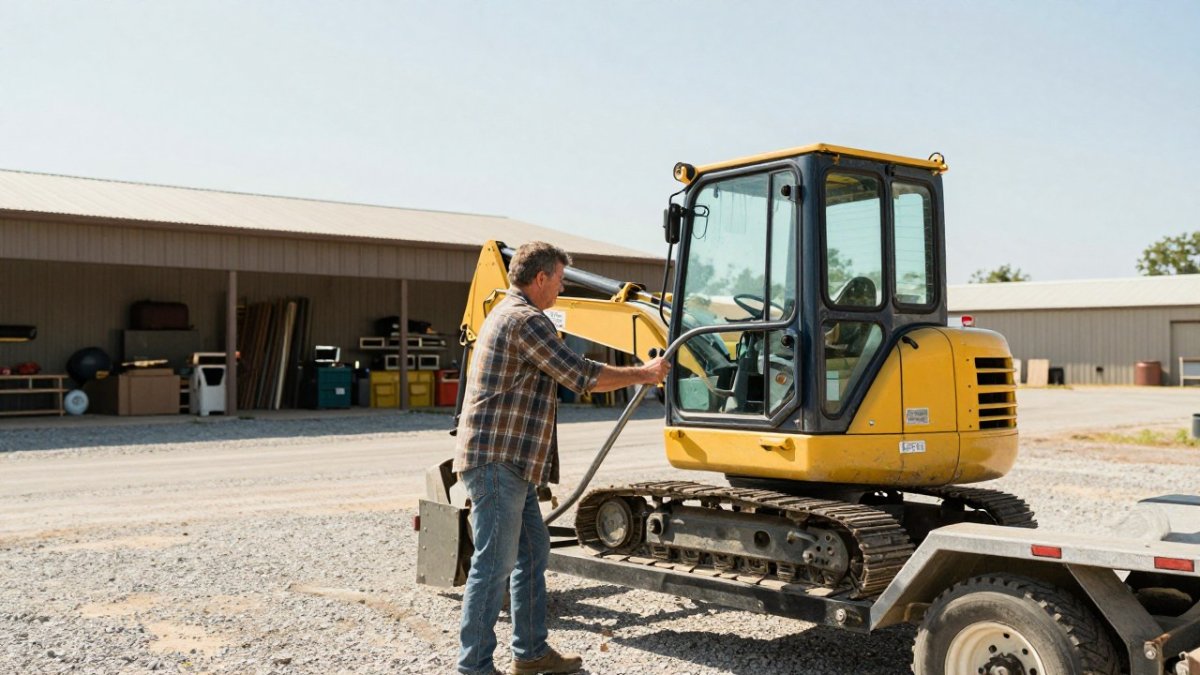
Delivery and pickup logistics decide how much of your rental day you actually get to use. If you're hauling the machine yourself, confirm your trailer and tow vehicle are rated for the operating weight plus the trailer, and use proper tie-downs at four points.
Ask three questions when you book: When will the machine arrive? Who unloads it? What's the pickup window? A machine that shows up at noon on a day rental eats half your working time, so confirm drop-off and pickup times in writing.
Your Mini Excavator Rental Checklist
A mini excavator rental checklist keeps a first-time rental from turning into a string of surprises. Run through it before you call, and again the morning of delivery.
- Confirm machine size against your job (4,000 lb vs 8,000 lb)
- Get daily, weekly, and monthly quotes for comparison
- Ask what delivery costs based on your distance
Reserve Your Mini Excavator for the Brazos Valley
The gap between a smooth first rental and a frustrating one comes down to preparation, not luck.
Diamond E Rental serves contractors, landscapers, and DIY homeowners across the Brazos Valley from our location at Knuckleheads Hardware, with high-quality equipment from trusted brands and delivery available on all equipment based on distance.
Ready to book? Order Online and reserve your machine, and we'll confirm availability and delivery for your dates.
Frequently Asked Questions
How much does a mini excavator rental cost per day?
There is no single daily rate because mini excavator rental cost depends on machine size, rental duration, and delivery distance. Weekly or monthly rates lower the per-day price. Delivery fees are often separate. Ask Diamond E Rental for a written quote that lists the daily rate, delivery charge, and any damage waiver so your total is clear before you book.
Do you need a license to operate a mini excavator?
No federal license is required to operate a mini excavator on private property. Some states and local jurisdictions have their own rules, and public right-of-way work may require permits. Before you dig, call 811 to have underground utilities marked, which is free and required in most states. Rental providers may also require proof of insurance or a signed operator agreement. Confirm requirements with your rental provider and local authorities before your project starts.
How do you choose the right size mini excavator for a project?
Start with the width of your access point and the depth of your dig. A 4,000 lb machine fits through most residential gates and handles trenching, landscaping, and small demolition. An 8,000 lb model digs deeper and lifts more but needs wider access and a heavier trailer. Match the machine's operating weight to your trailer and tow vehicle capacity. If you are unsure, describe your project to the rental team and let them recommend a model.
What should you check before renting a mini excavator?
Walk the machine before you sign. Check track condition, hydraulic hoses for leaks, fluid levels, and that the bucket teeth are intact. Confirm the hour meter reading and photograph existing damage so you are not charged for it at return. Ask about the fuel policy, damage waiver, and late-return fees. Verify the delivery window and where the machine can be safely dropped on your site. A short checklist at pickup prevents most disputes.
How do you transport and return a rented mini excavator?
Most renters have the machine delivered rather than towing it themselves. If you do haul it, you need a trailer rated for the machine's operating weight plus the bucket, and a tow vehicle within its rated capacity. Secure it with four chains and ratchet binders. On return, clean off heavy mud, refuel to the agreed level, and schedule the pickup or drop-off within the rental period to avoid extra day charges.
What safety precautions should beginners take with a mini excavator?
Keep the bucket low and the machine on stable ground, especially after rain when saturated soil can cause damage or tip risk. Wear a hard hat, safety glasses, and hearing protection. Keep bystanders outside the swing radius and never lift loads over people. Call 811 before digging and keep the trench walls sloped if anyone enters the excavation. Read the operator manual in the cab and ask the rental team for a walkthrough before you start.