 blog
Is Renting Equipment for Landscaping Projects Worth It?
Last Updated: October 30, 2026
Quick Summary
Renting equipment for landscaping projects makes sense when a job needs a machine for a few days but not a year. Match the machine to the task, since a skid steer and a mini excavator solve different problems. Compare weekly rates, delivery, and damage terms, not just the daily price.
- Rent when you need a machine for only a handful of projects per year.
- Skid steers suit volume work like spreading topsoil, grading and hauling fill.
- Mini excavators handle trenching, drainage lines and stump removal.
- Check for buried utilities before any digging starts.
- Ask for weekly or monthly rates if your project runs several days.
Table of Contents
- Skid Steer Rental for Landscaping: When a Skid Steer Is the Right Machine
- Mini Excavator Rental for Landscaping: Digging, Trenching and Tree Removal
- Equipment for Grading a Yard: Matching the Machine to Site Size
- Rent vs. Buy Landscaping Equipment: A Break-Even Framework
- Budgeting the Full Cost: Rental Rates, Delivery, Damage and Extensions
- Scheduling, Delivery and Safety Before You Pick Up Equipment
- Request a Quote and Reserve Your Machine for the Project
- Frequently Asked Questions
Renting equipment for landscaping projects makes sense when a job needs a machine for a few days but not a year. Most homeowners and small crews never need a skid steer or mini excavator on a permanent basis, so the question is which tasks justify the rental cost. Diamond E Rental serves the Brazos Valley and works with both contractors and DIY homeowners who need heavy machinery for a defined project.
The jobs that most often call for rented equipment share a few traits. They involve moving a large volume of soil, rock or debris, they cover more ground than hand tools can handle in a reasonable time, or they require a machine that can lift, dig or grade with precision. Typical examples include clearing an overgrown lot, leveling a yard before a new lawn, installing a French drain or irrigation trench, removing stumps and brush, and building raised beds or retaining walls.
A common mistake is renting the wrong class of machine because it seems cheaper per day. A compact skid steer and a mini excavator solve different problems, and choosing the wrong one adds hours of extra work. Match the machine to the task before comparing rates.
We recommend listing every task in the project and marking whether it involves digging, lifting, grading or hauling. Tasks that repeat across a large area are the strongest candidates for rented equipment. Small, one-off jobs that a shovel and wheelbarrow handle in an afternoon usually are not.
Skid Steer Rental for Landscaping: When a Skid Steer Is the Right Machine
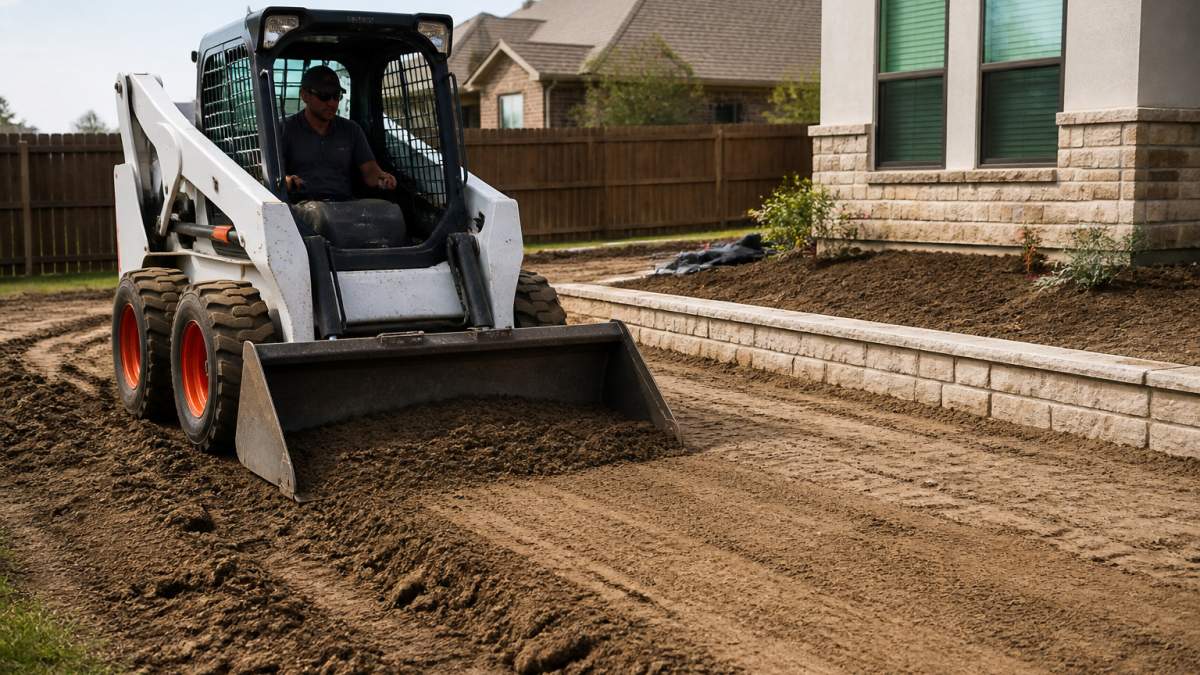
A skid steer loader is the workhorse for moving material across a property. It pushes soil, gravel and mulch, scrapes surfaces level and carries loads in a bucket or on attachments. Skid steers are compact enough to fit through a standard gate and maneuver on residential lots without damaging the lawn.
They fit best when the job is about volume and surface work: spreading topsoil, grading a backyard, hauling fill or cleaning up a site after demolition. Attachments such as augers, grapples and landscape rakes extend what one machine can do, which is why many landscapers rent a skid steer for several jobs in one visit. Mastering these heavy attachments often requires a steep learning curve that makes hiring professional landscapers a more efficient choice for complex site transformations.
Skid steers are less suited to deep trenching or precise digging, where a mini excavator performs better. Check the lift capacity and attachment compatibility when you reserve the machine.
!Compact skid steer loader grading soil on a residential lot beside a landscape bed
Mini Excavator Rental for Landscaping: Digging, Trenching and Tree Removal
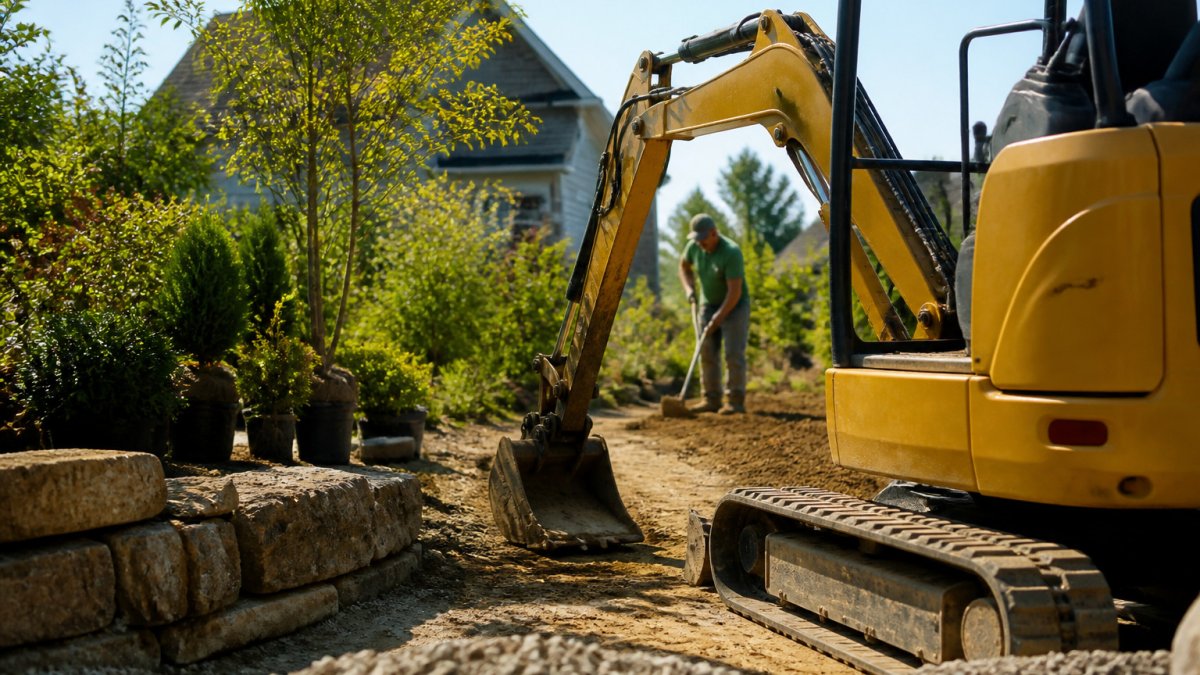
A mini excavator digs, trenches and lifts with an arm and bucket, and it can rotate to work in tight spaces. For landscaping, that means installing drainage lines, excavating for ponds, setting boulders and removing stumps. According to OSHA guidance on excavation safety, trenches deeper than five feet require protective systems, so confirm the depth of any trench before you dig.
Tree and stump removal is a frequent reason homeowners rent a mini excavator. The machine can pull roots and push out stumps that a shovel cannot manage without hours of labor. Plan for the ground to be soft after rain, and check for buried utilities before any digging starts.
Equipment for Grading a Yard: Matching the Machine to Site Size
Grading determines how water drains and how level a finished lawn will be. The right machine depends on how large the area is, how much material must be moved, and how tight the access is. Most rental catalogs list equipment by category but skip the decision logic, so use this framework to avoid renting a machine that is undersized, oversized, or simply wrong for the site.
Start with lot size and access. Small lots under a quarter acre, especially those with fences, trees, or narrow side yards, suit compact equipment. Compact equipment generally suits small lots with tight access, while larger sites with open access may justify a larger skid steer or track loader. Confirm the machine size against your own site with the rental location.
Consider the task, not just the acreage. If the job is primarily spreading and leveling, a skid steer with a bucket and a land plane or grading scraper attachment is efficient. If the job requires cutting a slope or moving dense clay, a track loader offers better traction and flotation. For fine grading before sod or seed, a walk-behind power rake or a skid steer with a Harley rake attachment gives more control than a bucket alone.
Mark the high and low points of the yard with stakes before you rent, and estimate the volume of cut and fill. A common rule of thumb is that one cubic yard of material covers about 100 square feet at a depth of 3 inches.
Finally, check the machine's rated operating capacity against the weight of the attachments you plan to use. Ask the rental location to confirm the lift capacity and attachment compatibility before you reserve.
Rent vs. Buy Landscaping Equipment: A Break-Even Framework
Renting makes sense when the number of project days per year is low. Buying pays off only when a machine is used steadily across many jobs. To decide, estimate the total rental days you will need in a year, then compare that figure with the purchase price plus maintenance, storage, insurance and depreciation over the machine's useful life.
A simple way to frame the decision:
- Rent if you need the machine for fewer than a handful of projects per year.
- Buy if you use it weekly across the growing season and can store and maintain it.
- Consider a hybrid approach: buy hand tools and small equipment, and rent heavy machinery for occasional projects.
Pricing depends on quantity, dates and delivery, so request a current quote from Diamond E Rental rather than relying on general estimates.
Budgeting the Full Cost: Rental Rates, Delivery, Damage and Extensions
The daily rate is only part of the total. Rental companies typically quote hourly, daily, weekly, and monthly rates, and the daily rate is rarely the best value if you need the machine for more than a day. Rate structures for daily, weekly and monthly rentals differ, so ask for the weekly or monthly rate if your project runs several days or more.
Delivery and pickup charges depend on distance and machine size, so factor them into your quote. If you can safely transport the machine yourself with a properly rated trailer and hitch, ask whether the rental company allows customer pickup and whether that reduces the cost.
Deposits and damage terms vary. Ask about any deposit, card hold or damage waiver before you reserve. Read the damage terms before you sign: normal wear is usually covered, but missing fuel, bent buckets, or cracked tracks may be charged separately. Confirm the fuel terms with the rental location before you pick up the machine.
Extensions are common when a project runs long. Confirm the rate for extending the rental before you start, and ask whether the extension rate is based on the original daily rate or a higher rate. A bad estimate on time is one of the most common budget overruns, so build in a buffer day if the work is weather-dependent.
Build a simple budget with these lines: base rental (at the weekly rate if applicable), delivery and pickup, fuel, damage waiver or deposit, operator time, and a contingency of about 10 percent for surprises. This structure makes it easier to compare quotes on equal terms. Diamond E Rental offers delivery based on distance, so include that cost when you compare your options.
The table below summarises the main cost lines to budget for, as described in this section.
| Cost line | What to check | Note |
|---|---|---|
| Base rental | Daily, weekly or monthly rate | Weekly rate is better for multi-day work |
| Delivery and pickup | Distance and machine size | Can be reduced if you transport it yourself |
| Fuel | Fuel terms | Confirm before pickup |
| Deposit or damage waiver | Card hold and damage terms | Normal wear is usually covered |
| Extensions | Original daily rate or a higher rate | Confirm the rate before starting |
| Contingency | Surprises and overruns | About 10 percent of the total budget |
Scheduling, Delivery and Safety Before You Pick Up Equipment
Reserve the machine before you commit to a start date, and confirm delivery timing with the rental location. A tight timeline depends on machine availability, so ask whether the model you need is in stock before you plan the work around it.
Before the machine arrives, clear the site, mark underground utilities and confirm access for a delivery truck. Review the operator manual, wear hearing and eye protection, and keep bystanders out of the swing radius. Many rental companies offer a short orientation, and taking it can prevent costly damage. Never operate a machine you have not been trained to use.
Request a Quote and Reserve Your Machine for the Project
Renting equipment for landscaping projects saves money when the work is defined and short. List your tasks, match each one to the right machine, and budget for delivery and extensions before you commit. Diamond E Rental, located at Knuckleheads Hardware, serves the Brazos Valley and can help you choose between a skid steer and a mini excavator for your site.
To check current availability and reserve your machine, order online or request a quote directly from Diamond E Rental. Pricing depends on quantity, dates and delivery distance, so a quote tied to your project is the most accurate way to plan your budget.
Frequently Asked Questions
What equipment can you rent for landscaping projects?
Equipment rental yards commonly offer a range of landscaping machines, so ask Diamond E Rental which models are available for your project. Skid steers suit grading, hauling and material moving, while mini excavators handle digging, trenching and tree or stump removal in tighter spaces. Choose by the task first, then by how much room the machine needs to reach and turn on your site. Pricing depends on quantity, rental dates and delivery distance, so request a quote from Diamond E Rental for current rates.
Is it better to rent or buy landscaping equipment?
Renting usually makes more sense for one-off or seasonal projects, because you avoid purchase price, storage, insurance and maintenance. Buying starts to pay off when you need the same machine on most jobs throughout the year. Compare the total cost of renting for the number of days you expect to use it against your purchase and ownership costs. Check your own schedule and the expected days of use before deciding, since the break-even point depends on how often you run the machine.
How do I choose the right size excavator or skid steer for landscaping?
Start with site access, such as gate width, doorways and overhead clearance, then consider the work reach and the weight the surface can support. A skid steer is often easier to get into a backyard, while a mini excavator gives more reach and digging depth. Measure the narrowest access point and mark the area the machine must cover before you call. A rental yard can recommend a size once you describe the job and the access route.
What should I check before renting landscaping equipment?
Confirm the rental dates, delivery window, pickup terms and what the rate includes before you reserve. Ask about damage responsibility and any charges for late return or extended use, and what happens if the machine breaks down during the job. Check that you or your operator are trained on the machine and that you have the protective equipment the job requires. Ask about any utility locates needed before digging on your property.