 ultimate-guide
Renting Construction Equipment for DIY Projects: 2026 Guide
Table of Contents
- Choosing the Right Construction Equipment for DIY Projects
- Heavy Equipment Rental Costs: What Drives the Total Bill
- Mini Excavator Rental: Sizing, Site Access, and When to Book
- Equipment Rental Delivery and Pickup Logistics
- Equipment Rental Safety for First-Time Renters
- Rent, Buy, or Hire a Contractor? A Decision Framework
- Rental Logistics and Return Requirements
- Conclusion
- Frequently Asked Questions
Last Updated: October 21, 2026
Choosing the Right Construction Equipment for DIY Projects
Renting construction equipment for DIY projects starts with one decision: match the machine to the job, not to your ambition. A mini excavator that won't fit through a side gate wastes a day.
The homeowners who finish on schedule aren't the ones who rent the biggest machine. They're the ones who measured their gate, counted their trench feet, and picked accordingly.
Construction equipment rental works differently from tool rental. You're not grabbing a saw for an afternoon.
Matching Machines to Common DIY Jobs
Here's the pairing that holds up in practice:
| Job | Machine | Why It Fits |
|---|---|---|
| Foundation or pool digging | Mini excavator | Reaches depth without tearing up the yard |
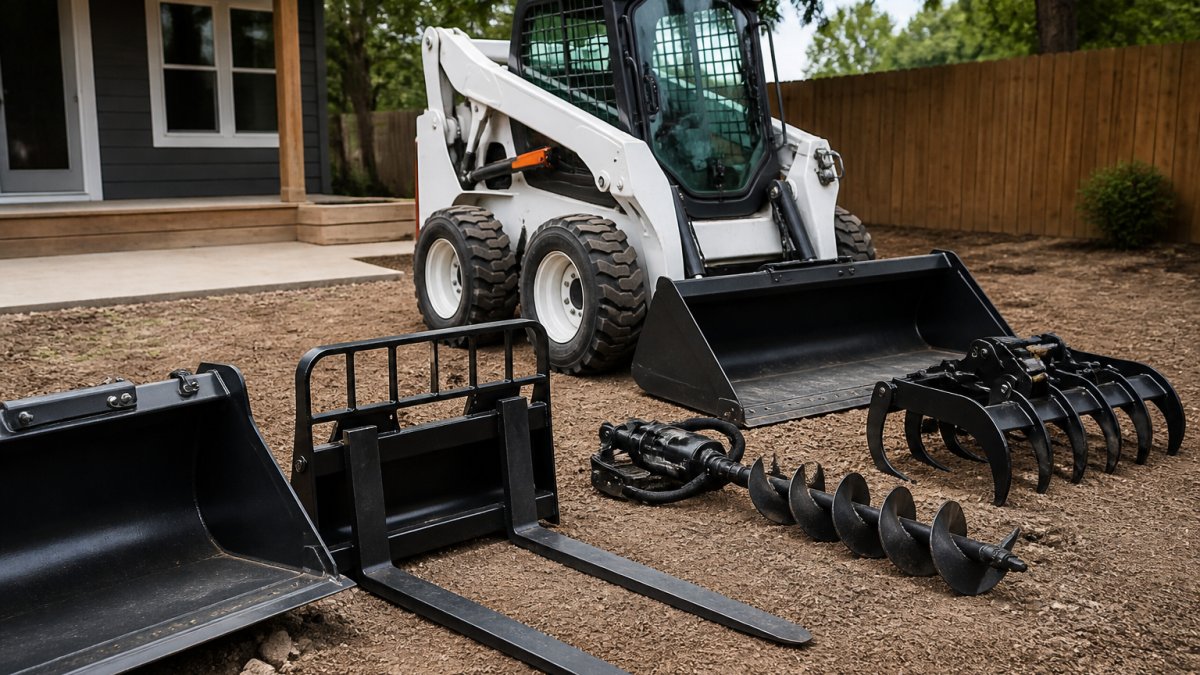
| Grading and leveling | Skid steer | Fast material movement in tight space |
| Utility trenching | Walk-behind trencher | Narrow cut, less backfill |
| Patio and driveway prep | Plate compactor | Consistent compaction in small passes |
| Tree and brush clearing | Compact track loader | Traction on soft, uneven ground |
| Material lifting | Telehandler | Reach over obstacles without repositioning |
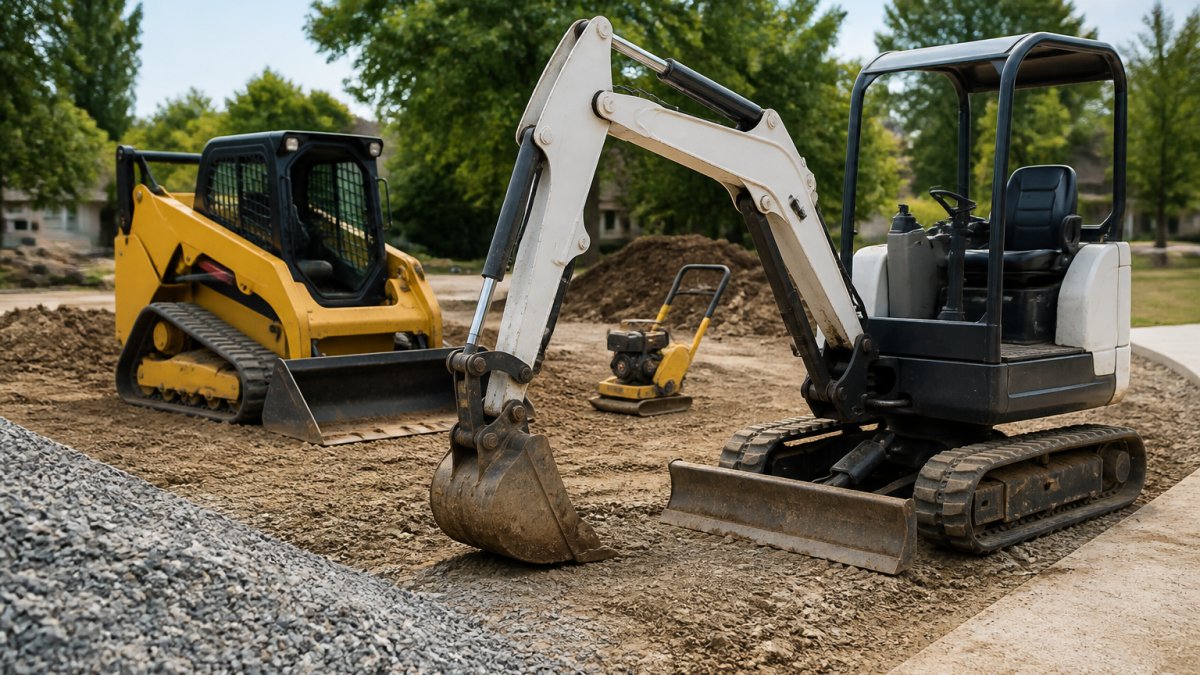
Most residential projects need one primary machine and one or two support tools. Rent the support tools for the same window so you're not making return trips.
Heavy Equipment Rental Costs: What Drives the Total Bill
Heavy equipment rental costs come down to four variables: machine class, rental period, delivery distance, and site conditions.
The daily rate is the number everyone asks about. It is also the number that misleads the most.
Delivery is the second variable. Providers typically price delivery by round-trip distance and machine size, and a machine that needs a trailer and a ramp costs more to move than one that rolls off a ramp truck.
The charges that surprise first-time renters are the ones outside the rate card:
- Security deposit or authorization hold: often a fixed amount or a percentage of the rental, refunded or released after the machine comes back clean and undamaged. Ask whether it is a charge or a hold on your card.
- Fuel: machines usually go out full and are expected back full. If you return one low, expect a refuel charge plus a service fee, often more than the fuel itself.
- Cleaning: caked mud on tracks and undercarriage is the most common cleaning charge. A pressure-wash fee is cheaper than a damage claim, but both are avoidable.
- Damage and wear: teeth, blades, and cutting edges are wear items. Normal wear is expected; a broken tooth or a bent bucket edge is billed.
Building a Project Budget That Holds Up
Build the budget in five lines, not one:
- Machine rental: the tier rate for the period you actually need, plus one buffer day
- Delivery and pickup: the quoted round-trip fee, confirmed in writing
- Consumables: fuel, teeth, blades, and any attachment wear items
- Deposit or hold: the amount tied up until return, so it does not surprise your card statement
- Contingency: a reserve for the extension you will probably need
The buffer day matters more than people expect. Projects run long when weather, permits, or a surprise root system intervenes.
For current rates on specific machines, request a quote rather than working from a published number. Pricing depends on machine, dates, and delivery, and a quote is the only figure that reflects your actual job. When you compare quotes, compare the delivered total, rate plus delivery plus deposit, not the daily rate alone.
Mini Excavator Rental: Sizing, Site Access, and When to Book
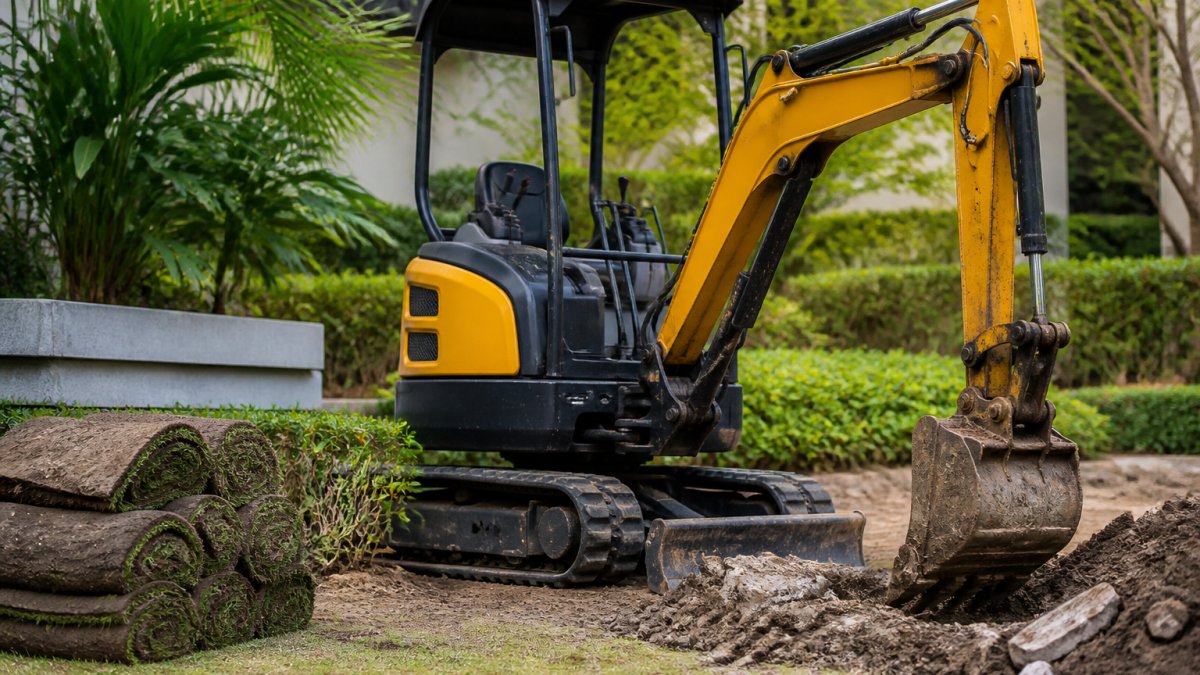
Mini excavator rental is the most requested category for residential work, and the most commonly mis-sized. The right unit depends on three measurements: gate width, digging depth, and swing clearance.
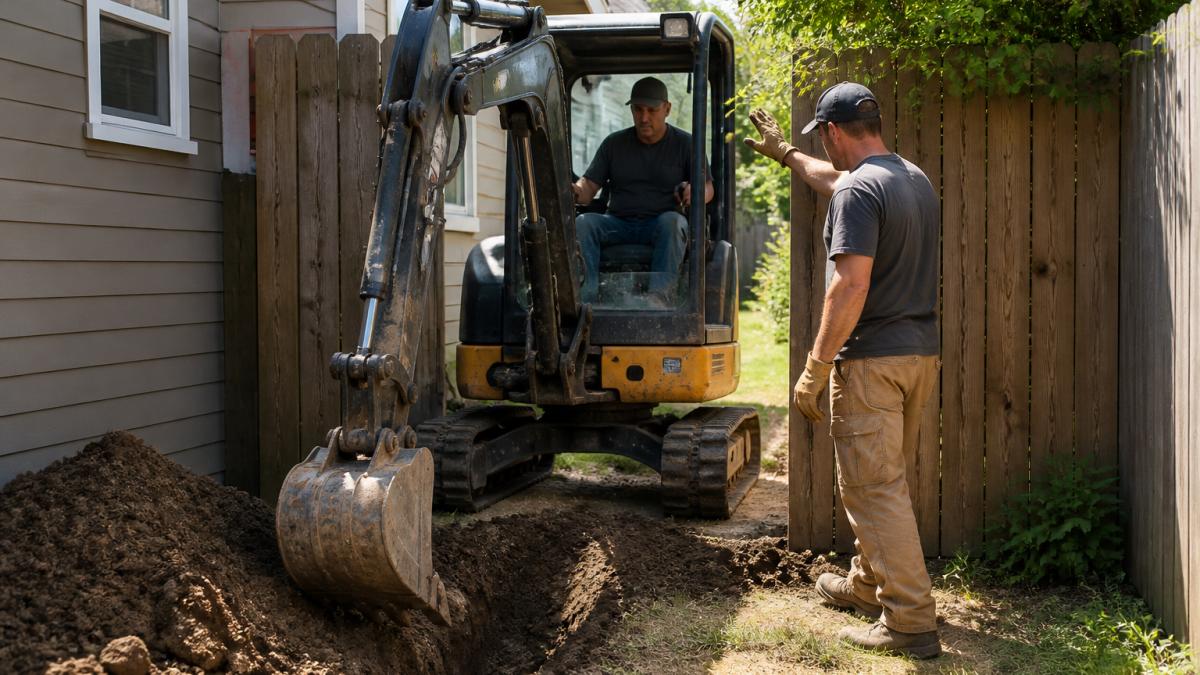
Measure the narrowest point on the route before anything else.
Book early for spring and fall. Those are the busy windows for landscaping and site prep, and availability tightens. If your timeline is fixed, reserve the machine before you finalize the contractor schedule, not after.
Equipment Rental Delivery and Pickup Logistics
Equipment rental delivery removes the biggest barrier for first-time renters: transport. A mini excavator is not a trailer you hook up on a Saturday morning. It needs the right truck, the right tie-downs, and a driver who has done it before. Delivery also solves the site access problem, because the driver who drops the machine can tell you whether the placement works before you start digging.
Confirm four things when you book delivery:
- Drop location: where exactly on the property the machine lands, and whether the truck can reach it
- Surface conditions: gravel, grass, and soft soil all change the approach, and a loaded trailer can rut a lawn
- Pickup window: when the machine leaves, so you are not paying for a day you did not use
- Access path: gates, overhead lines, and driveway width, the same measurements that decide machine size decide whether the truck can deliver it
The Return Workflow, Step by Step
Return requirements are where first-time renters lose money. Machines come back dirty, fueled wrong, or a day late, and each of those has a line item attached. Treat the return as a checklist, not an afterthought:
- Clean before you load. Knock off caked mud and rinse the undercarriage. Cleaning charges are common and avoidable.
- Match the fuel level. Machines usually go out full and are expected back full. Top off at a station near the yard, not at the last mile.
- Document condition. Photograph the machine again at return, same angles as pickup, and note the hour meter reading.
- Report damage immediately. A phone call during the rental is cheaper than a surprise at return. Most providers would rather hear about a bent tooth on day two than discover it on the invoice.
- Check the clock. Late returns can bill at a higher daily rate, and some agreements bill the full weekly rate once you cross the return window. Read the extension policy before you need it, extending is usually a phone call; a missed return is usually a fee.
Pickup Versus Delivery: When to Tow It Yourself
Some machines are light enough to haul on a rented trailer, and doing it yourself can save the delivery fee. The trade-off is real: you need a vehicle rated for the loaded trailer weight, the right hitch and tie-downs, and a route without low clearance. For a mini excavator or a skid steer, the trailer, the tie-downs, and the insurance exposure usually make delivery the better deal, and the delivery driver's placement check is worth part of the fee on its own.
Equipment Rental Safety for First-Time Renters
Equipment rental safety starts before the machine arrives.
Walk the site first. Look for overhead lines, buried utilities, slope, and soft ground. Call 811 before any digging project; the service is free and it's the difference between a trench and an outage.
Then ask for the walkaround. A good provider demonstrates controls, shows you the safety interlocks, and explains what to do if something fails mid-job.
Rent, Buy, or Hire a Contractor? A Decision Framework
Renting wins when the machine is needed for days, not years. Buying makes sense when you'll use the equipment repeatedly and have storage and maintenance capacity. Hiring a contractor wins when the job needs licensed operators, permits, or work you can't safely do yourself.
Use this test:
- Frequency: once or twice, rent. Monthly, price out buying.
- Duration: under a few weeks, rent. Longer, the math shifts.
- Skill: if you can't operate it safely, hiring a crew is cheaper than a mistake.
- Site: if access is tight or the ground is unstable, an experienced operator earns their rate.
Renting also lets you test a machine class before committing to a purchase, which is a legitimate reason on its own.
Rental Logistics and Return Requirements
Return requirements are where first-time renters lose money. Machines come back dirty, fueled wrong, or a day late, and each of those has a line item attached.
The standard expectations:
- Clean the machine: caked mud on tracks and undercarriage often triggers a cleaning charge
- Return fuel level: match the level it left with, or expect a refuel fee
- Check the clock: late returns can bill at a higher daily rate
- Report damage immediately: a phone call during the rental is cheaper than a surprise at return
Read the rental agreement for the extension policy before you need it. Extending is usually a phone call; a missed return is usually a fee.
Conclusion
The gap between a smooth equipment rental and an expensive one is almost never the machine. It's the planning: the gate measurement, the delivery quote, the walkaround, the return checklist.
Diamond E Rental serves the Brazos Valley from our location at Knuckleheads Hardware, with delivery available on all equipment based on distance and a range of heavy machinery including mini excavators, skid steers, and bulldozers.
Get started with Diamond E Rental and book the right machine for your project, delivered when you need it.
Frequently Asked Questions
How do I choose the right equipment for a DIY construction project?
Start with the job itself: digging, lifting, grading, or moving material. Match the machine to the task, then check access. A mini excavator fits through a standard 36-inch gate; a skid steer needs roughly 5 to 6 feet of clearance. Confirm the rental period covers your timeline, ask about delivery, and reserve early if your project falls on a weekend. Diamond E Rental can walk you through equipment selection based on your project requirements and site conditions.
How much does it cost to rent construction equipment?
Heavy equipment rental costs depend on the machine type, rental period, delivery distance, and any attachments you add. Daily, weekly, and monthly rates all differ, and weekend specials can lower the total. Rather than quoting a flat number, ask for a full breakdown that includes delivery, fuel, taxes, and damage waiver. Diamond E Rental provides quotes based on your specific project, so you know the total before signing.
Can construction equipment be delivered to my project site?
Yes. Equipment rental delivery is available on all equipment from Diamond E Rental, with fees based on distance to your site. Delivery saves you from needing a heavy-duty trailer and a truck rated for the machine's weight. When scheduling, confirm the drop-off window, where the driver can safely unload, and whether a person needs to be on site to receive the equipment. Pickup at the end of the rental follows the same process.
What safety precautions should DIYers take when using heavy equipment?
Equipment rental safety starts before you start the engine. Call 811 to have underground utilities marked before any digging. Read the operator manual, wear the required PPE, and keep bystanders outside the work zone. Walk the site for slopes, soft ground, and overhead lines. Never exceed the machine's load rating, and shut down and remove the key when stepping away. If anything feels wrong, stop and call the rental provider rather than pushing through.
How long should I rent construction equipment?
Match the rental period to your actual working days, not the calendar. A weekend rental often covers a Saturday and Sunday for the price of one day. For multi-week jobs, weekly or monthly rates usually cost less than stacking daily charges. Build in a buffer for weather delays, but avoid open-ended rentals since every extra day adds cost. Ask about extension policies up front so you know the rate if the project runs long.
What should I check before returning rented equipment?
Clean off dirt and debris, refuel to the level stated in your contract, and check for new damage or missing attachments. Photograph the machine before it leaves your site as a record. Review the rental agreement for cleaning fees or fuel charges so nothing surprises you on the final invoice. Return on time or confirm an extension in writing. A quick walkaround with the rental staff at drop-off protects both sides.