 blog
7 Front Loader Rental Tips for Brazos Valley Projects
Last Updated: November 24, 2026
Quick Summary
Front loader rental gives you a heavy-duty earthmoving machine with a wide bucket on two hydraulic lift arms, built to scoop, lift, and dump loose material. Match the machine type and size to your job first: a wheel loader loads trucks, a backhoe loader digs and loads, and a compact unit fits tight residential access. Confirm bucket and lift capacity against the material's weight, then book early because loaders are the most requested rental category.
- A front loader is a bucket-and-lift-arm setup found on wheel loaders, backhoes, and tractor loaders.
- Articulated wheel loader daily rental rates averaged $1,031 in Q3 2026, with weekly rates at $2,865.
- Measure the narrowest gate opening before choosing a compact loader size class.
- Reserve attachments with the machine, since a last-minute swap can push your start date.
- Photograph existing damage and confirm the fuel level before signing the delivery inspection.
Table of Contents
- Front Loader Rental: What You're Actually Renting
- Wheel Loader Rental: Sizes, Capacities, and Jobsite Fit
- Small Front End Loader Rental Near Me: Compact Options for Tight Access
- Tractor Loader Backhoe Rental: When a Two-in-One Machine Makes Sense
- Front End Loader Rental Prices: What Drives Your Quote
- Attachments, Delivery, and Renter Responsibilities
- Reserve Your Front Loader Rental with Diamond E Rental
- Frequently Asked Questions
Front Loader Rental: What You're Actually Renting
Front loader rental gives you a heavy-duty earthmoving machine with a wide bucket mounted on two hydraulic lift arms, built to scoop, lift, and dump loose material. The U.S. construction and industrial equipment rental market is projected to reach $83.5 billion in 2026, up 3.4% year over year, according to Construction Equipment's 2026 rental market forecast. That growth matters to anyone pricing a front loader rental in the Brazos Valley: supply is tightening, and booking early beats calling around.
At Diamond E Rental, we see the same confusion on nearly every call. People ask for a "front loader" when they need a skid steer, or they reserve a full-size wheel loader for a job a compact machine would finish faster. Below, we break down the seven decisions that shape a front loader rental, from machine type to delivery, so you reserve the right equipment the first time.
A front loader is not a single machine category. It is a bucket-and-lift-arm configuration that shows up on wheel loaders, tractor loaders, and backhoes, and each one behaves differently on a jobsite.
Front Loader vs. Wheel Loader vs. Backhoe: Key Differences
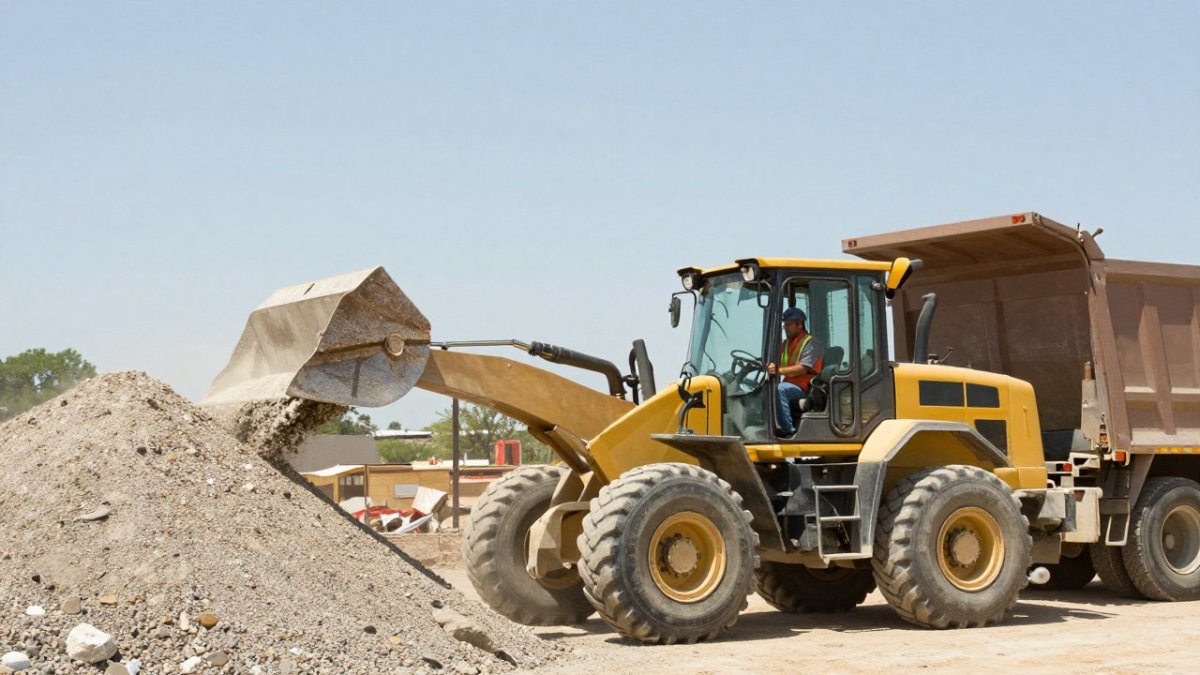
The terms overlap, but the machines do not. A front loader describes the bucket assembly itself. A wheel loader is the four-wheeled chassis that carries it, built for loading trucks and moving stockpiled material. A backhoe loader adds an excavator arm on the rear, so one machine digs and loads.
For a first-time renter, the practical question is what the machine must do first. If the job is scooping gravel into a dump truck, a wheel loader is the answer. If the job is digging a trench and then backfilling it, a backhoe loader saves a second rental. If the job is moving mulch around a barn, a tractor loader does it at a lower daily rate.
If you have never reserved heavy equipment before, our step-by-step heavy equipment rental guide walks through the paperwork, deposit, and inspection process before you commit.
Wheel Loader Rental: Sizes, Capacities, and Jobsite Fit
Wheel loader rental comes in three practical size classes, and the right one depends on access width, material weight, and how high you need to dump. Earthmoving equipment is projected to hold 53.54% of the construction equipment rental market in 2026, per Fortune Business Insights' construction equipment rental analysis, which means loaders are the most requested category and the most likely to be booked out.
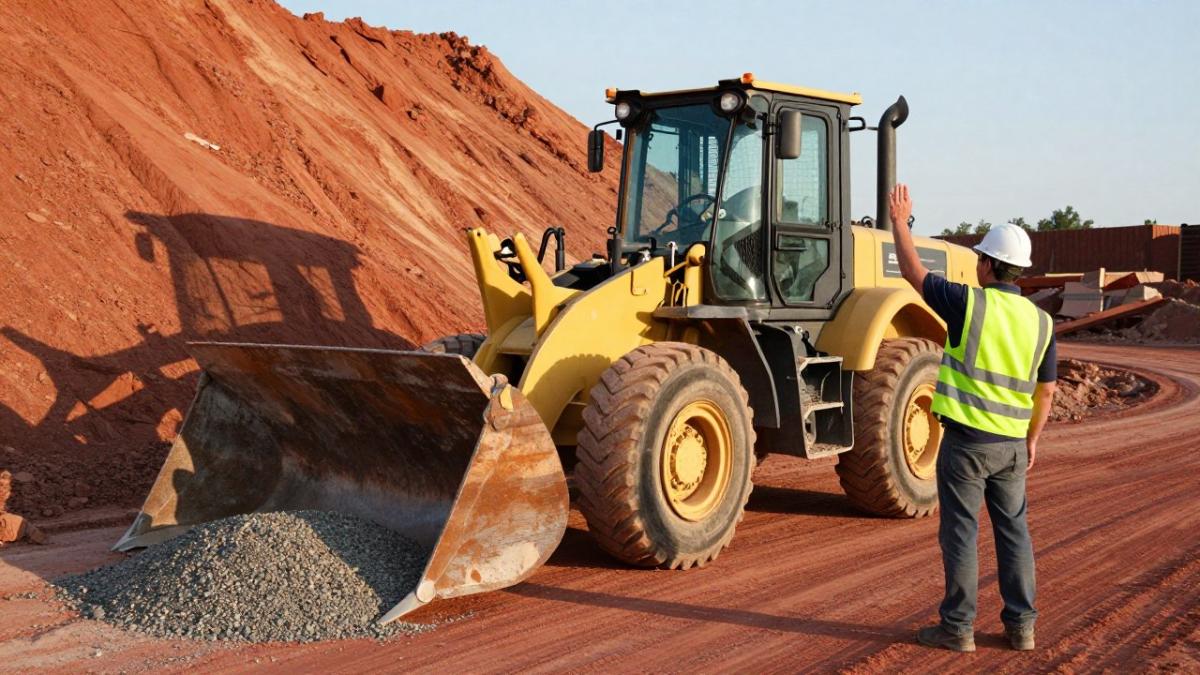
Compact wheel loaders fit through gates and between structures. Mid-size machines handle most residential and light commercial site work. Full-size loaders move volume fast but need wide access and a solid, level staging area.
Bucket Capacity, Lift Capacity, and Operating Weight Explained
Three specs decide whether a loader can do your job:
- Bucket capacity is the volume the bucket holds, measured in cubic yards. It sets how many passes it takes to load a truck.
- Lift capacity is the weight the arms can raise safely at full height. Wet sand and gravel are far heavier than mulch or topsoil at the same volume.
- Operating weight is the machine's own mass. Heavier machines stay stable with a full bucket but can crack thin concrete or sink into soft ground.
A common mistake is sizing by bucket volume alone. A bucket full of saturated gravel can weigh roughly twice what the same bucket of dry topsoil weighs, and an undersized loader will strain or tip. Tell the rental desk what material you are moving and how wet it is, and let the lift capacity drive the choice.
Small Front End Loader Rental Near Me: Compact Options for Tight Access
Small front end loader rental near me searches usually come from homeowners and landscapers working in tight quarters, and compact machines are the right answer.
Residential applications are expected to account for 38.47% of the construction equipment rental market in 2026, according to Fortune Business Insights' market projections.
Compact loaders generally fall into a few access classes, and the class you need is set by the narrowest gate or doorway on the route to the work area, not by the size of the pile:
| Access class | Typical machine width | Best for | Main limitation |
|---|---|---|---|
| Walk-behind / mini | Under 3 ft | Backyard gates, between raised beds, inside fences | Low lift height; slow cycle times |
| Compact skid steer or track loader | Roughly 3-5 ft | Residential regrading, brush, tight turns on finished lawns | Bucket volume limits truck-loading speed |
| Compact wheel loader | Roughly 5-6.5 ft | Driveway and small commercial pads, faster travel between piles | Needs a wider gate and a firmer surface |
Measure the narrowest opening first, then measure the turning radius available at the dump point. A machine that fits through the gate but cannot swing its bucket clear of a fence line is the wrong rental.
Two compact categories cover most residential work. Skid steers are the tightest-turning option and run dozens of attachments. Compact wheel loaders carry more bucket volume and travel faster across open ground.
Watch out: a compact machine sized to fit a gate can still be too light to lift a heaped bucket of wet gravel at full height.
Tractor Loader Backhoe Rental: When a Two-in-One Machine Makes Sense
Tractor loader backhoe rental makes sense when one project needs both digging and loading, and renting two machines would cost more than the convenience is worth. A backhoe loader digs foundations, trenches, and utility runs with the rear arm, then swings around and loads the spoil into a truck with the front bucket.
The trade-off is precision. A dedicated excavator digs cleaner and reaches deeper. A dedicated wheel loader carries more volume per pass. The backhoe loader wins on logistics: one delivery, one operator, one machine to fuel and insure.
For farm and ranch work, a backhoe loader also handles fence-line clearing, culvert installation, and livestock pen repair without a second reservation. On a tight schedule, that single drop-off and pickup often saves a full day.
Front End Loader Rental Prices: What Drives Your Quote
Front end loader rental prices depend on machine size, rental duration, attachments, and delivery distance, not on a single posted rate. Published market data gives a useful benchmark: articulated wheel loader daily rental rates averaged $1,031 in Q3 2026, with weekly rates at $2,865, according to Equipment World's coverage of EquipmentWatch's Q3 2026 rental rates report. Those are national averages across the articulated loader class.
Four factors move your number:
| Cost Factor | What Changes It | How to Control It |
|---|---|---|
| Machine size | Larger loaders carry higher rates | Match capacity to material, not to habit |
| Rental duration | Daily, weekly, and monthly tiers | Weekly rates often beat 4-5 daily rates |
| Attachments | Extra buckets, forks, grapples | Reserve only what the job needs |
| Delivery distance | Round-trip haul and fuel | Confirm the fee before you sign |
Delivery and damage charges are worth confirming before you reserve so there are no surprises on the final invoice. Our guide to avoiding hidden equipment rental fees lists the line items to confirm in writing before you reserve.
Ask any rental provider whether delivery is included or billed by distance, what the damage policy is, and whether the rental can be extended at the same rate.
Attachments, Delivery, and Renter Responsibilities
Attachments let one loader handle several kinds of work, so choosing the right one matters for the timeline of your job. Match the attachment to the material, not to what happens to be sitting on the lot:
| Job | Attachment | Why it fits |
|---|---|---|
| Loading gravel, sand, or soil into a truck | General-purpose bucket | Heaped volume and a flat cutting edge for scooping |
| Moving pallets, pipe, or lumber | Pallet forks | Lifts without dumping; keeps loads level |
| Clearing brush, storm debris, or demolition spoil | Grapple or root rake | Grabs and holds irregular material a bucket drops |
| Spreading topsoil or grading a yard | Tooth bucket or land-planer attachment | Breaks up compacted ground and leaves a smoother finish |
| Snow removal or surface cleanup | Snow pusher or angle broom | Clears pavement without gouging it |
Reserve the attachment with the machine, because the right bucket for gravel is the wrong bucket for mulch, and a swapped attachment at the last minute can push your start date.
Delivery and pickup are where schedules slip.
On delivery day, do the inspection before you sign anything:
- Photograph existing damage, including bucket wear edges, hydraulic hoses, tires or tracks, and glass.
- Confirm the fuel level and record it on the inspection sheet.
- Check that the attachment mounted is the one on your quote.
- Ask the driver to demonstrate the controls and the parking brake before they leave.
- Confirm the pickup window and who signs the return inspection.
Our heavy machinery delivery service comparison covers the delivery options and how distance affects cost. If you are new to operating heavy machinery, read our beginner's guide to renting heavy machinery safely before the machine arrives.
Renter responsibilities are straightforward but non-negotiable. Keep the loader on stable ground and avoid working across a slope steeper than the machine is rated for. Never lift a load over a person or over the cab of a truck.
Watch out: operating a loader on soft ground after heavy rain is how machines get stuck and how damage charges get triggered.
Reserve Your Front Loader Rental with Diamond E Rental
Reserving a front loader rental with Diamond E Rental starts with a conversation about the job, not the machine. We are located at Knuckleheads Hardware and serve the Brazos Valley, including Bryan and Franklin, with heavy machinery from trusted brands.
Tell us about the material, access width, and timeline of your project. If you want criteria for vetting any provider, our guide to choosing reliable heavy equipment rental services covers what separates a smooth rental from a costly one.
Call ahead, request a quote, and let us handle the delivery.
The difference between a productive week and a stalled jobsite often comes down to one reservation made early enough. Diamond E Rental offers affordable rental options, high-quality equipment from trusted brands, and delivery available on all equipment across the Brazos Valley.
Frequently Asked Questions
How much does front loader rental cost?
Rates vary by machine size, rental period, and delivery distance. Diamond E Rental quotes pricing based on your dates, equipment, and delivery location, so request a quote for exact numbers before you commit.
What size front loader do I need for my project?
Match the machine to your material, terrain, and access. Compact loaders fit residential gates and tight landscaping jobs, while mid-size wheel loaders handle truck loading and bulk earthmoving on commercial sites. Check bucket capacity against your daily volume, lift capacity against your heaviest loads, and operating weight against soil conditions and trailer limits. If you are unsure, describe your job to the rental team and they can recommend a size.
Can a front loader be delivered to my job site?
Yes. Diamond E Rental offers delivery on all equipment, with fees based on distance from the Knuckleheads Hardware location. Delivery covers the Brazos Valley, including Bryan and Franklin. Request delivery when you reserve, and ask about pickup pricing before you book. Ask about site access before delivery day so the trailer can reach the drop point.
Do I need a special license or training to operate a front loader?
Operators should be trained and competent on the machine before use. If you are a homeowner tackling a one-time project, ask about a walkthrough at pickup and read the operator manual before you start the machine.