 Comparison
Heavy Machinery Delivery Service Options Compared
Last Updated: November 1, 2026
Quick Summary
Heavy machinery delivery moves an excavator, skid steer or bulldozer from the rental yard to your job site, and the trailer type you choose shapes the schedule, cost and risk of damage. Common options are flatbed, step-deck, lowboy and removable gooseneck trailers, each suited to different machine sizes and loads. Compare quotes on total landed cost at your address.
- Trailer type matters: a lowboy suits tall machines, while flatbeds fit wide or long loads that sit low.
- Confirm deck height and load angle before booking, since they show whether your machine will fit.
- Send operating weight, width, height and length, including attachments, when you book.
- Ask for an itemized quote covering fuel, permits, loading time and accessorial charges.
- Clear a wide, tall path and confirm the ground can carry the machine's weight before drop-off.
Table of Contents
- Comparing Delivery Methods: Lowboy, Flatbed, Step-Deck, and Gooseneck Trailers
- Matching Machine Dimensions and Weight to the Right Trailer
- What Drives Heavy Equipment Delivery Cost
- Equipment Rental Delivery Fees and Hidden Charges to Check
- Preparing Your Job Site for a Heavy Equipment Drop-Off
- Booking Your Delivery: What to Ask Before You Order
- Frequently Asked Questions
Heavy machinery delivery is the step that gets an excavator, skid steer or bulldozer from a rental yard to your job site on time and in one piece. For contractors and DIY owners alike, the delivery method you choose shapes the schedule, the cost and the risk of damage. Diamond E Rental offers delivery on its equipment, so this guide walks through the options and what to check before you book. Proper preparation remains the most effective way to ensure that transporting heavy machinery safely stays within your project budget while minimizing the potential for costly delays.
The market for this work is growing. Research and Markets values the heavy machinery transport service market at USD 8.05 billion in 2026 and projects it to reach USD 12.1 billion by 2032, a 6.8% compound annual growth rate (Research and Markets heavy machinery transport service market report). More providers means more options, and more reasons to compare them carefully.
Most delivery runs follow the same sequence. The machine is loaded onto a trailer at the rental location, transported to the site, and unloaded where you direct it. Each step has its own requirements, including ground conditions, access routes and clearance for the trailer.
Comparing Delivery Methods: Lowboy, Flatbed, Step-Deck, and Gooseneck Trailers
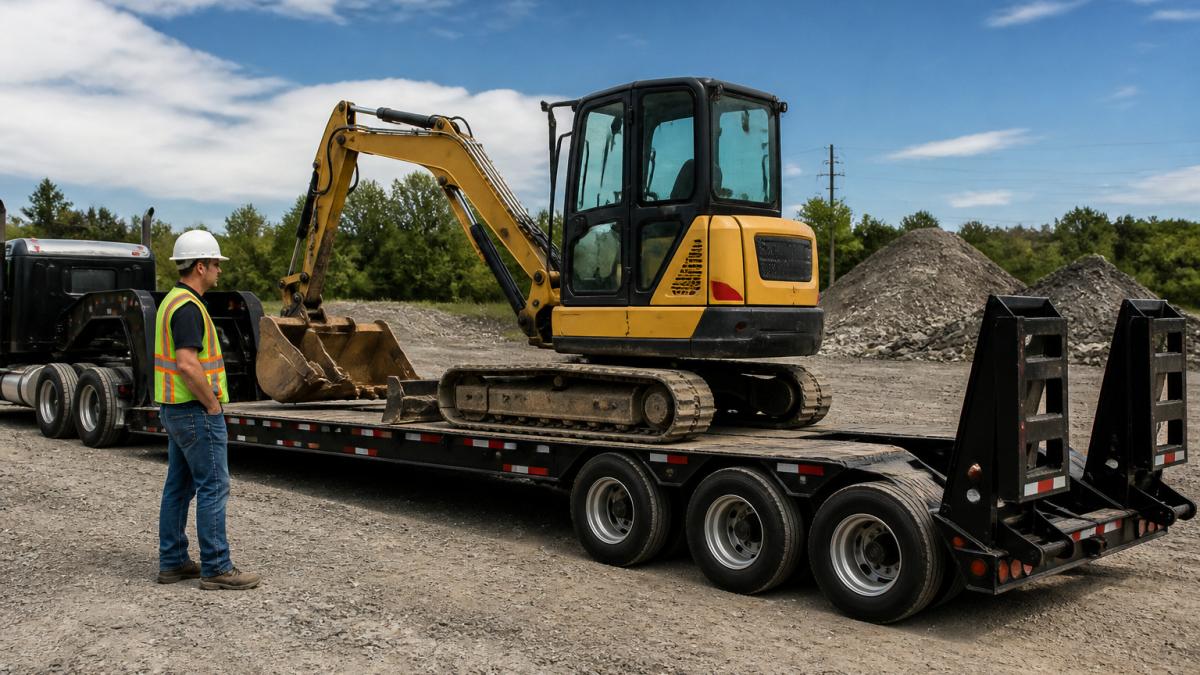
Trailer type matters more than most renters expect, and the fastest way to choose one is to compare the four common configurations on the specs that actually decide the move: deck height, load angle, weight capacity, and how much permit exposure each one creates.
| Trailer type | Deck height (typical) | Load angle | Best for | Watch-outs |
|---|---|---|---|---|
| Flatbed | About 48-60 inches | Steep; ramps required | Wide or long loads that already sit low; skid steers and small lifts | Tall machines can exceed legal height once loaded |
| Step-deck | About 38-42 inches at the lower section | Moderate | Mid-size excavators and machines that need a lower profile without a full lowboy | Deck transition limits where the machine can sit |
| Lowboy | About 18-24 inches | Shallow; roll-on friendly | Tall excavators, dozers, and anything near a height limit | Longer trailer, tighter turning radius, more route planning |
| Removable gooseneck (RGN) | About 18-24 inches, front detaches | Near-flat; drive-on | Very long or very heavy machines that need a detachable front | Loading takes longer and needs more site space |
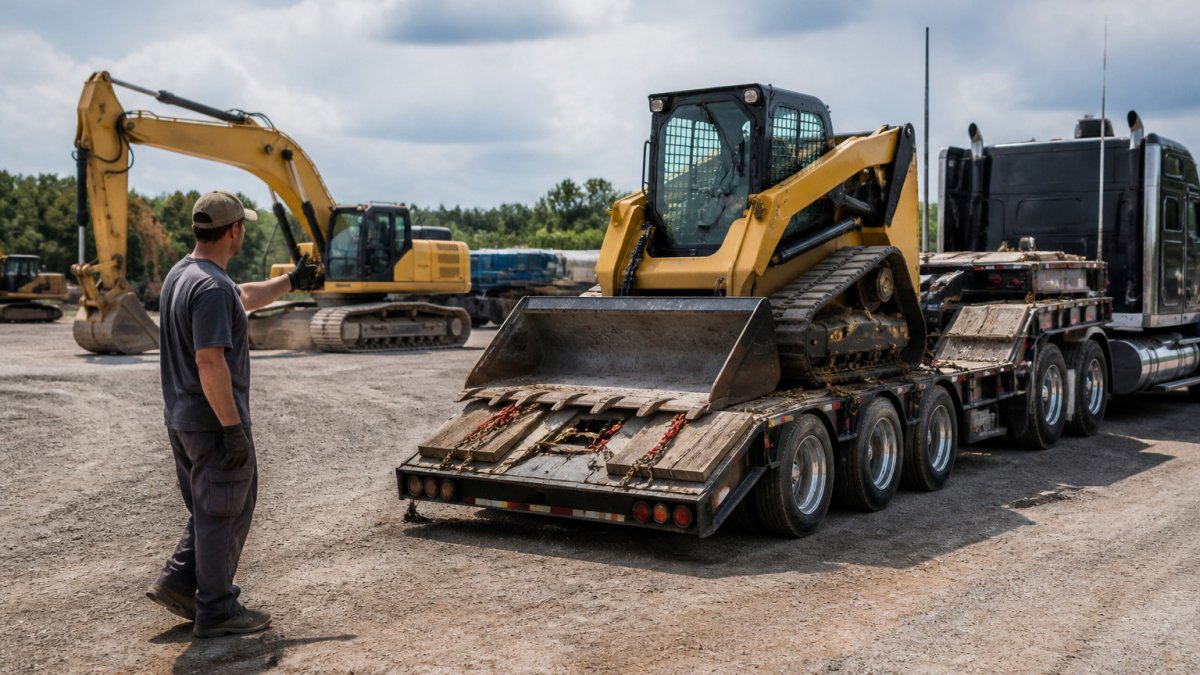
A lowboy trailer has a low deck that lets taller machines clear height restrictions and roll on and off without a steep ramp. Flatbeds suit wider or longer loads that sit low already. Step-decks combine a lower deck section with a flat main deck, and removable gooseneck trailers handle machines that need extra length or a detachable front.
It is worth asking which trailer will carry your specific machine before you book.
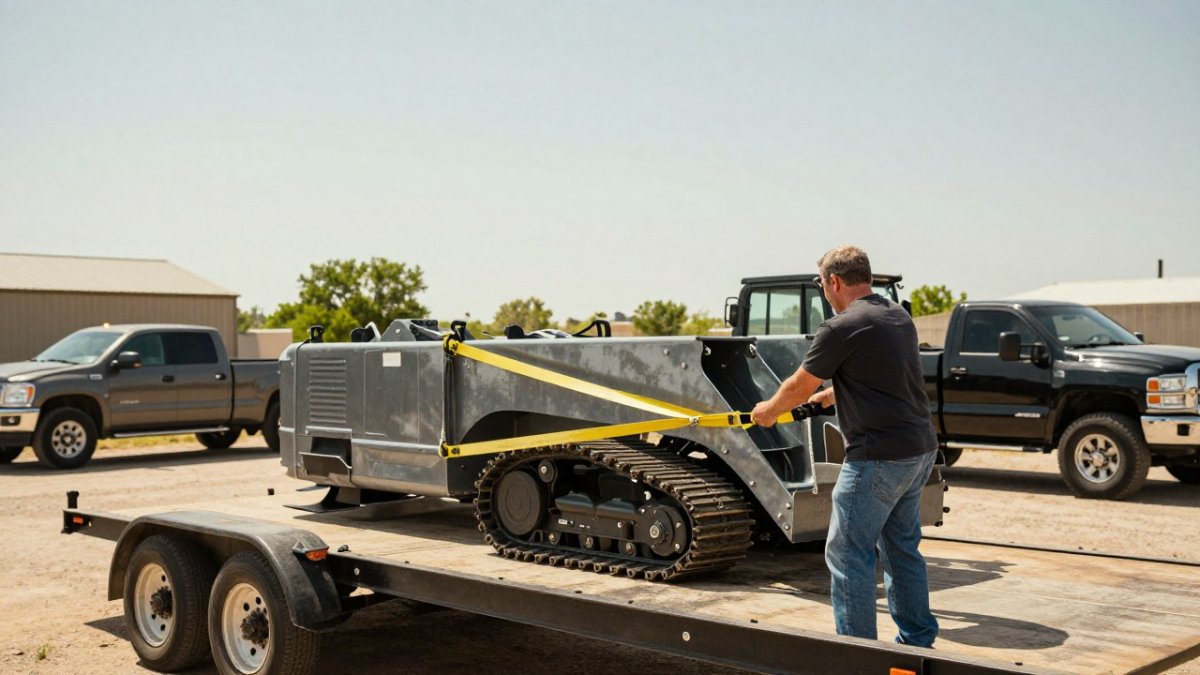
The trailer choice also changes loading time and the number of trips. A flatbed may need ramps and a second person to spot the load, while a removable gooseneck trailer lets the machine drive on but requires more room to detach and reattach the neck. Confirm the configuration in writing so you know what is coming to your site.
Matching Machine Dimensions and Weight to the Right Trailer
Start with the machine's operating weight, width, height and length, including any attachments. Those four numbers determine which trailers are legal and safe for the route. A machine that fits on a flatbed in theory may still exceed a state width limit once a bucket is mounted.
Weight also drives permits. Loads above standard legal limits typically require an oversize or overweight permit, and the permit rules vary by state. Check the Federal Motor Carrier Safety Administration guidance and your state department of transportation before you schedule a move (FMCSA regulations on commercial vehicle size and weight).
Bring your machine specs to the booking call. A short list of dimensions prevents a trailer from showing up that cannot carry the load.
What Drives Heavy Equipment Delivery Cost
Delivery cost depends on distance, trailer type, the number of trips, permits and the time needed at the site. Shipping rates for heavy equipment are commonly quoted per mile. One industry source puts U.S. heavy-equipment hauling at roughly USD 3 to USD 8 per mile on standard hauls, with rates falling toward about USD 1 per mile on routes longer than 2,000 miles (A-1 Auto Transport heavy equipment shipping statistics 2025-2026). Those figures describe the broader market, not our pricing.
A per-mile rate is only the starting point. The total on your invoice is built from several layers, and knowing them lets you compare quotes on equal footing:
- Distance and deadhead. You pay for the loaded miles and often for the miles the trailer travels empty to reach you. A short haul can carry a higher effective per-mile rate because the deadhead is spread over fewer loaded miles.
- Dimensions and weight. A machine that fits a flatbed prices differently from one that needs a lowboy or RGN. Oversize width, height, or weight adds permit costs and may require pilot cars or a longer route.
- Route and access. Highway miles are cheaper than city miles. Low bridges, weight-restricted roads, and tight site entrances add time and planning, and some carriers charge for a route survey.
- Permits. Oversize and overweight permits are priced by state and by load, and the cost is usually passed through. Multi-state moves can stack several permit fees.
- Fuel. Many quotes include a fuel surcharge that moves with diesel prices. Ask whether the surcharge is fixed at booking or adjusted on delivery day.
- Accessorial charges. Loading and unloading time beyond a free window, wait time at the site, remote or difficult access, and cleaning fees are common add-ons. These are the line items most often left out of a headline rate.
Delivery pricing depends on quantity, rental dates and distance from the rental location. Visit the Diamond E Rental website to request a quote for current delivery charges for your job.
Equipment Rental Delivery Fees and Hidden Charges to Check
Hidden fees are the most common complaint with equipment delivery. Ask for a written quote that lists every charge: base delivery, fuel, permits, loading or unloading time, and any surcharge for remote or difficult sites. Also ask about damage and cleaning policies so nothing comes as a surprise on the final invoice.
Some providers advertise a low base rate that excludes these items. Compare quotes on the total landed cost at your address, not the headline number.
Preparing Your Job Site for a Heavy Equipment Drop-Off
Clear a path wide and tall enough for the trailer, and confirm the ground can carry the weight. Soft soil, wet grass and unpaved drives are frequent causes of delays. Mark the spot where the machine should be unloaded, and make sure someone on site can direct the driver.
Check for overhead lines, low branches and gates. A short walk of the route before delivery day catches most problems early.
Booking Your Delivery: What to Ask Before You Order
Before you order, confirm the machine you need is in stock, the delivery date and time window, and the trailer type. Ask how quickly the equipment can reach your site, and whether the timeline fits your project. Ask what happens if the equipment needs repair during use and how support responds. Finally, ask how an extension affects your rate if the job runs longer.
Start your order online or contact Diamond E Rental to confirm details. Get the written quote and delivery window in hand before you commit to a start date.
Frequently Asked Questions
What are the options for delivering heavy machinery?
Heavy machinery is typically moved on lowboy trailers, flatbed trailers, step-deck trailers, or removable gooseneck trailers. Heavy equipment providers list these four trailer options for different loads. Lowboys suit low-profile, heavy machines, while flatbeds handle wider or longer items that fit standard deck heights. Step-decks help with taller equipment. Confirm which trailer your provider will use, and whether it fits your machine's height, width, and weight before you book.
How much does it cost to deliver heavy equipment?
Heavy equipment hauling is commonly quoted per mile, and rates vary with distance, equipment size and route. For local delivery to a job site, distance is the main factor, but trailer choice, permits, and loading requirements also affect the final bill. Diamond E Rental does not publish delivery prices here; pricing depends on quantity, dates, and delivery distance. Visit the Diamond E Rental website or request a quote for current figures.
Does heavy equipment delivery require special permits?
Oversize and overweight loads may need transport permits, depending on the machine's dimensions and weight and the roads used. Permit requirements are set by state and local authorities, so check with your delivery provider about what applies to your machine and route. Providing accurate weight and dimensions when you request a quote helps the provider determine whether a permit is needed before the delivery date.
What information do I need to get a heavy equipment delivery quote?
Have the equipment type and model, its weight and dimensions, the delivery address, the job site access conditions, and your preferred delivery date ready when you request a quote. Access details such as gate width, overhead clearance, and ground conditions help determine the right trailer and whether extra equipment or time is needed. Complete information reduces the chance of surprise fees after booking.