 How-to
How to Transport Heavy Equipment Safely and Legally
Last Updated: November 21, 2026
Quick Summary
To transport heavy equipment safely and legally, first weigh and measure the machine with attachments and fuel, then match a rated trailer to that gross weight. Secure it with at least four tie-downs whose combined working load limit meets or exceeds the cargo weight, and confirm permits and route limits before you move.
- Pull the operating weight from the owner's manual or data plate, then add attachments and a full tank of fuel.
- A lowboy trailer suits tall, heavy machines because the low deck keeps overall height down.
- Federal rules require an aggregate working load limit of at least half the cargo weight.
- A 40,000 lb excavator may need eight or more rated chains or heavy straps.
- Permits are issued state by state and are not interchangeable on multi-state routes.
Table of Contents
- Step 1: Assess Your Equipment and Plan the Move
- Step 2: Pick the Right Equipment Transport Trailer
- Step 3: How to Secure Heavy Equipment on a Trailer
- Step 4: Route Planning, Permits, and Site Access
- Step 5: Loading, Unloading, and Pre-Trip Inspection
- Equipment Hauling Rates per Mile and What Drives the Quote
- When to Use Heavy Equipment Transport Companies Instead of DIY
- Book Delivery and Get Your Machine on Site
- Frequently Asked Questions
Step 1: Assess Your Equipment and Plan the Move
Knowing how to transport heavy equipment starts with one hard rule: never book a trailer before you know the machine's exact weight and size. This mistake costs contractors time and money. Get the numbers right first, and every later step gets easier.
Weigh It and Measure It Before You Book Anything
Pull the machine's operating weight from the owner's manual or the data plate. Then add the weight of every attachment, plus a full tank of fuel. A bucket or breaker can add hundreds of pounds you didn't plan for.
Write down four numbers before you call anyone:
- Gross weight with attachments and fuel
- Overall length from tip to tail
- Overall width at the widest point
Those four figures drive trailer choice, permit needs, and the final quote. Guessing at any of them is how oversize loads get flagged at a weigh station.
Step 2: Pick the Right Equipment Transport Trailer
The right equipment transport trailer matches your machine's weight, dimensions, and loading method. Pick the trailer first, then confirm the tow vehicle can handle the combined load.
Lowboy, Flatbed, or Ramp Trailer: Matching Trailer to Machine
Each trailer type solves a different problem:
- Lowboy trailer: Best for tall, heavy machines. The low deck keeps overall height down and clears bridges.
- Flatbed trailer: A flexible choice for mid-size loads with a straight ramp or crane loading.
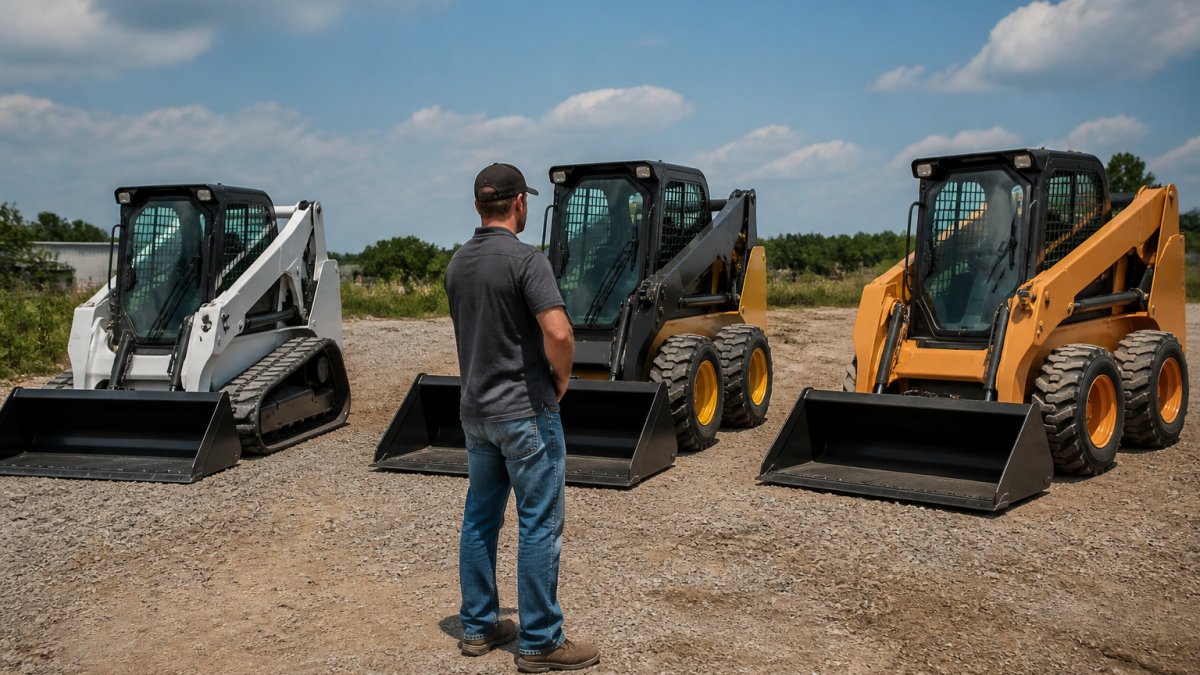
- Ramp trailer: Ideal for skid steers and mini excavators that drive on under their own power.
Check the trailer's load capacity against your gross weight, not the bare machine weight. Aim for a trailer rated comfortably above your total. Weight distribution matters too: put the heaviest part of the machine over the trailer's axles, not the tail.
Step 3: How to Secure Heavy Equipment on a Trailer
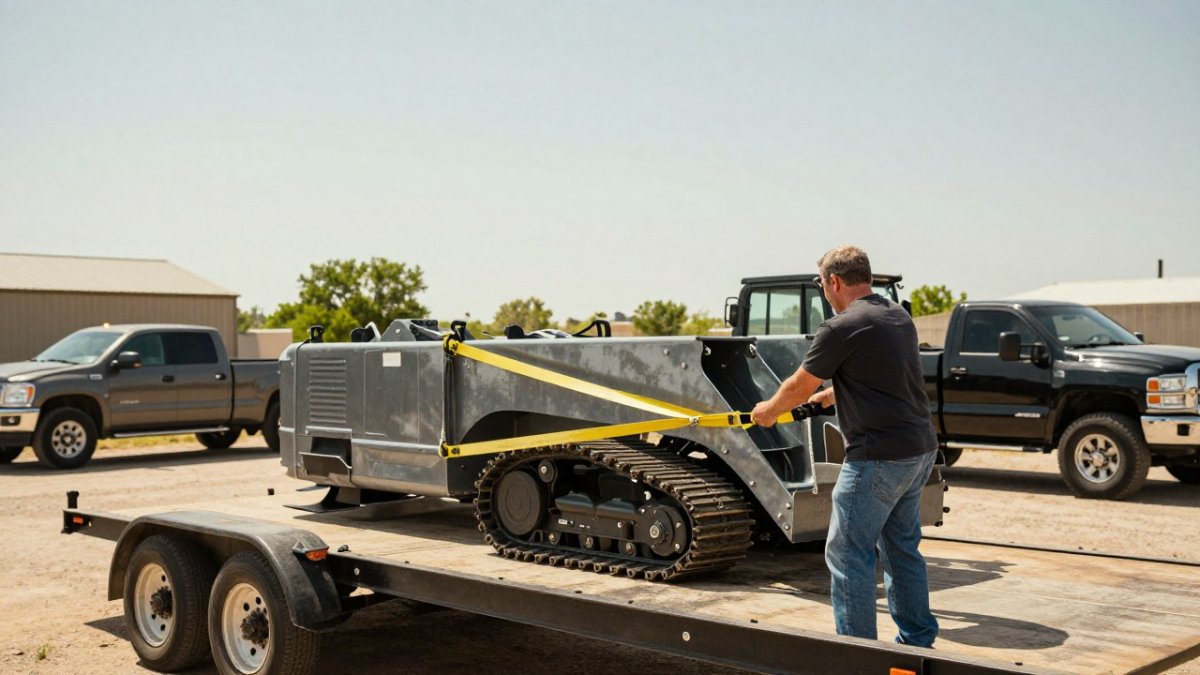
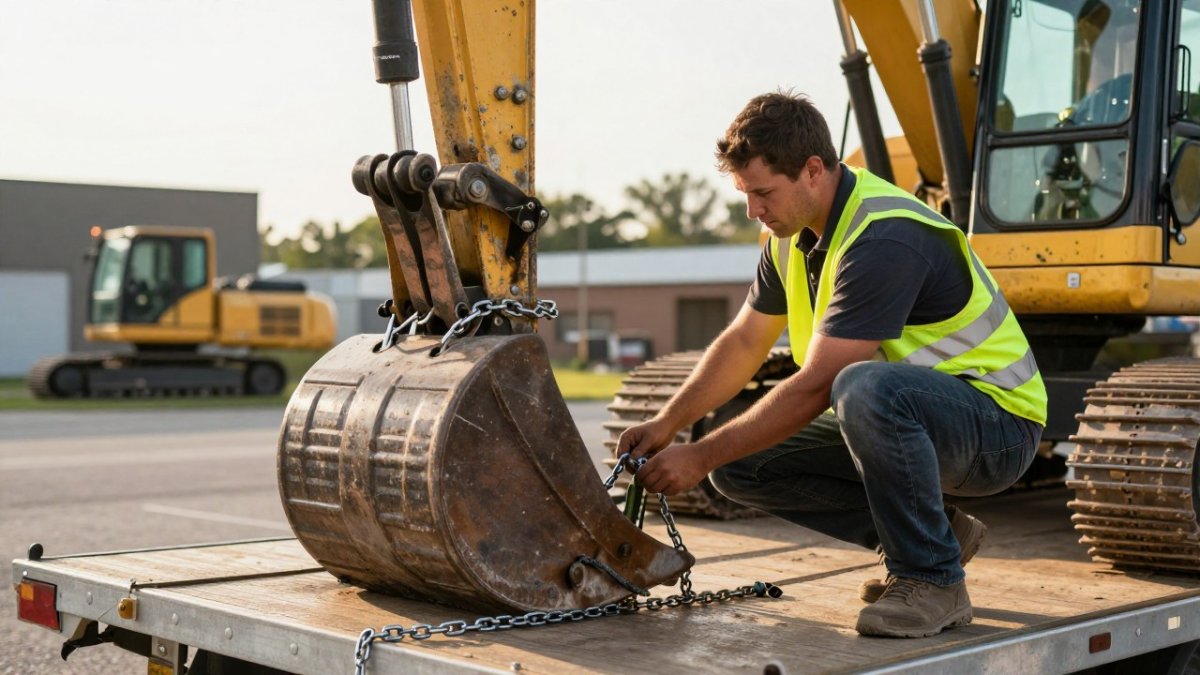
Securing a machine means locking it to the trailer with rated chains or heavy-duty straps and binders, with at least four tie-down points. Load securement is where shortcuts turn into highway accidents, and it is also where the math matters more than the muscle.
The Aggregate Working Load Limit Rule
Every securement device has a working load limit, or WLL. That number is the most it should hold in service.
Run the numbers before you load: add the machine weight, attachments, and fuel, then confirm the combined working load limit of your chains or straps meets or exceeds that total.
That is why chain count is not a fixed number.
Direct vs. Indirect Securement and Equipment-Specific Tie-Down Points
Direct securement runs a chain or strap from the trailer deck to a designated tie-down point on the machine and back to the deck. Indirect securement loops over a component, such as a bucket or axle, and pulls down on both sides.
Tie-down points differ by machine:
- Excavators: Use the manufacturer's designated lifting and tie-down lugs on the track frame and house. Lower the boom, curl the bucket, and pin the arm. Do not wrap chains around hydraulic hoses or the bucket teeth.
- Wheel loaders: Tie down at the frame and axle points, not the articulation joint. Lower the bucket to the deck and set the parking brake.
- Dozers: Use the track frame and blade arms. Lower the blade and ripper, and block the blade if it cannot sit flat.
A common pattern is to cross the chains in an X pattern over the deck so the load cannot walk sideways.
Binders, Re-Checks, and What Fails First
Tighten chains with ratchet or lever binders until there is no slack, then secure the binder handle with a tie so it cannot open in transit. Check straps and chains again after the first few miles, and again at every stop.
Watch out: a strap that looks tight at the yard can loosen within ten miles, and a load that shifts at highway speed is the most common cause of a serious hauling accident. Build a re-check stop into the route before you reach highway speed.
Step 4: Route Planning, Permits, and Site Access
Permits and route planning decide whether your haul runs smoothly or stalls at the first scale. An oversize load often needs a state permit, and some routes require escort vehicles or restrict travel to daylight hours. The gap most guides leave open is the detail: what counts as oversize, how long a permit takes, and how to verify the route before the truck rolls.
Legal Limits and When You Cross Into Oversize
Legal dimensions and weights for travel without a permit vary by state. Check your state transportation department's current limits before you haul, because a load beyond them typically needs an oversize or overweight permit.
Measure your load against those numbers before you book:
Loads that exceed your state's legal width, height, length, or weight limits generally need an oversize or overweight permit, and the permit will specify any required banners, escorts, or route review.
A machine that fits legal width can still exceed height limits once loaded on a trailer. Measure the loaded height, not the bare machine height.
Permit Lead Times, Escorts, and Travel Restrictions
Permit lead times vary by state and by load.
Escort requirements vary by state. Your permit will tell you whether a pilot car, height pole vehicle, or rear escort is required for your load.
Travel restrictions are the other trap. Some states restrict oversize travel to daylight hours, holidays, or rush-hour periods, and some require a police escort for certain dimensions.
Route Survey and Site Access
Start by mapping the route around low bridges, weight-restricted roads, and tight turns. Then check the destination. Can a truck and trailer actually get in? Is there room to turn around?
A practical route survey covers:
- Clearance: bridge and overpass heights along the route, plus overhead power lines at the site
- Weight limits: posted bridge and road limits, especially on rural approaches
- Turning radius: tight intersections, cul-de-sacs, and driveway entrances
- Surface: gravel, soft ground, or grades that a loaded trailer cannot handle
For any load beyond standard legal limits, confirm permit requirements with your state transportation department before you move. Requirements vary by state, so verify rather than assume, and keep a copy of the permit and route in the cab.
Step 5: Loading, Unloading, and Pre-Trip Inspection
A safe haul depends on a clean load and a thorough inspection before the wheels roll. Loading and unloading cause more injuries than the drive itself, so slow down and use a spotter.
Follow this pre-trip checklist every time:
- Ramps or loading surface is clean, dry, and rated for the load
- Machine is centered on the trailer deck
- All attachments are lowered and pinned
- Four or more tie-downs are tight and rated
Loading ramps need a safe angle and firm footing. Line the machine up straight, move slowly, and keep the spotter in view. Once loaded, do a second walk-around before you pull out.
Equipment Hauling Rates per Mile and What Drives the Quote
Equipment hauling rates vary with the job, and no single number fits every move. Most quotes blend a flat minimum with a per-mile rate, then adjust for the load itself.
Here's what moves the number up or down:
| Cost Factor | What It Covers | Impact on Quote |
|---|---|---|
| Distance | Local haul vs. long-distance haul | Per-mile rate applies after a flat minimum |
| Weight and size | Oversize load or heavy machine | Higher rate, possible permit fees |
| Permits and escorts | State requirements, escort vehicles | Added pass-through cost |
| Site access | Tight entry, soft ground, long carry | Extra time and equipment |
| Loading needs | Ramps, crane, or winch required | Added labor and setup |
A local haul usually carries a flat minimum, while a long-distance haul leans on the per-mile rate. For a closer look at which rental charges are normal, see our guide to avoiding hidden equipment rental fees.
When to Use Heavy Equipment Transport Companies Instead of DIY
Hiring a professional transporter makes sense when the load is oversize, the route crosses state lines, or you lack a rated trailer and tow vehicle. DIY hauling works for smaller machines on short, simple routes.
Weigh the trade-offs honestly:
- DIY: Lower direct cost, but you supply the trailer, tie-downs, permits, and driving time.
- Professional: Higher upfront cost, but they handle permits, securement, insurance, and compliance.
Before you hand a machine to any transporter, check their insurance, ask who holds liability during the move, and confirm how damage claims are handled. Our guide on how to choose reliable heavy equipment rental services covers the criteria that matter. If you're still deciding between hauling yourself and hiring out, this comparison of heavy machinery delivery service options lays both paths side by side.
Book Delivery and Get Your Machine on Site
The simplest way to skip the trailer, permit, and securement headaches is to have the machine delivered. Diamond E Rental offers delivery on all equipment, with rates based on distance, so your excavator or skid steer arrives ready to work. For current pricing and a quote, visit the Diamond E Rental website. Our step-by-step rental guide walks you through booking and delivery.
Hauling heavy equipment safely comes down to four numbers, four tie-downs, and one honest quote. If planning the move feels like more work than the project itself, let us handle delivery. Diamond E Rental stocks mini excavators, bulldozers, and skid steers, offers delivery on all equipment, and serves the whole Brazos Valley. Get started with Diamond E Rental and get the right machine to your site on schedule.
Frequently Asked Questions
Do you need a permit to transport oversized equipment?
Yes, in most cases. Any load exceeding the legal width, height, or weight limits for a given route generally requires an oversize or overweight permit from the state transportation department. Permits are route-specific and may come with travel restrictions such as daylight-only movement or escort vehicle requirements. Confirm permit needs before you book a haul, because an unpermitted oversize load can be stopped and fined, and the schedule slips while paperwork is sorted out.
How much does it cost to haul heavy equipment?
Equipment hauling rates per mile vary with distance, machine weight, trailer type, permit needs, and whether the load is local or long-distance. Short local hauls often carry a flat minimum that covers mobilization, while long-distance moves price closer to a per-mile rate. Oversize loads and escort requirements add cost. Ask for a written quote that itemizes the flat minimum, per-mile charge, permits, and any fuel or accessorial fees so nothing appears on the invoice later.
Can rental equipment be delivered to a job site?
Many rental providers, including Diamond E Rental, offer delivery based on distance, which removes the need to own a trailer or arrange your own haul. Delivery is often the safer choice for homeowners and small crews who do not haul heavy machinery regularly. Confirm the drop-off location, ground conditions, and access width when you book, and ask whether pickup is included or billed separately so the total cost is clear up front.
How do you choose a heavy equipment transport company?
Check for active operating authority, cargo insurance that covers the value of your machine, and experience with your specific equipment type. Ask how they handle permits, whether they provide a written quote with itemized fees, and what their damage claims process looks like. Read reviews for on-time performance rather than price alone. A company that answers permit and insurance questions directly is usually the one that shows up prepared.