 How-to
7 Skid Steer Rental Tips for Farm Maintenance Jobs
Last Updated: November 2, 2026
Quick Summary
A skid steer rental for farm maintenance suits tight-quarters jobs like clearing fence lines, grading gravel lanes, moving feed and material, and cleaning out barns. Match the machine's rated operating capacity and attachments to your ground and tasks, then book the shortest rental period the job allows.
- Tracks float better over soft pasture and mud, while wheels suit hard gravel and concrete.
- A grapple bucket grabs, carries, and piles cut brush, saving a second pass with a trailer.
- A tractor wins on open-field work and long hauls; a skid steer wins on tight lift-and-carry jobs.
- The Home Depot lists 4-hour, 24-hour, weekly, and monthly rental options.
- MechLink reports weekly skid steer rental at USD 600 to USD 1,900 and monthly at USD 1,500 to USD 5,000.
Table of Contents
- Farm Maintenance Jobs a Skid Steer Handles Best
- Skid Steer Size for Farm Use: Match the Machine to Your Ground
- Skid Steer Attachments for Farm Use That Earn Their Keep
- Skid Steer vs Tractor for Farm Work: Which Fits the Job
- Skid Steer Rental Duration: Daily, Weekly, or Monthly
- What Drives Your Skid Steer Rental Cost
- Booking Your Skid Steer Rental with Diamond E Rental
- Frequently Asked Questions
Farm Maintenance Jobs a Skid Steer Handles Best
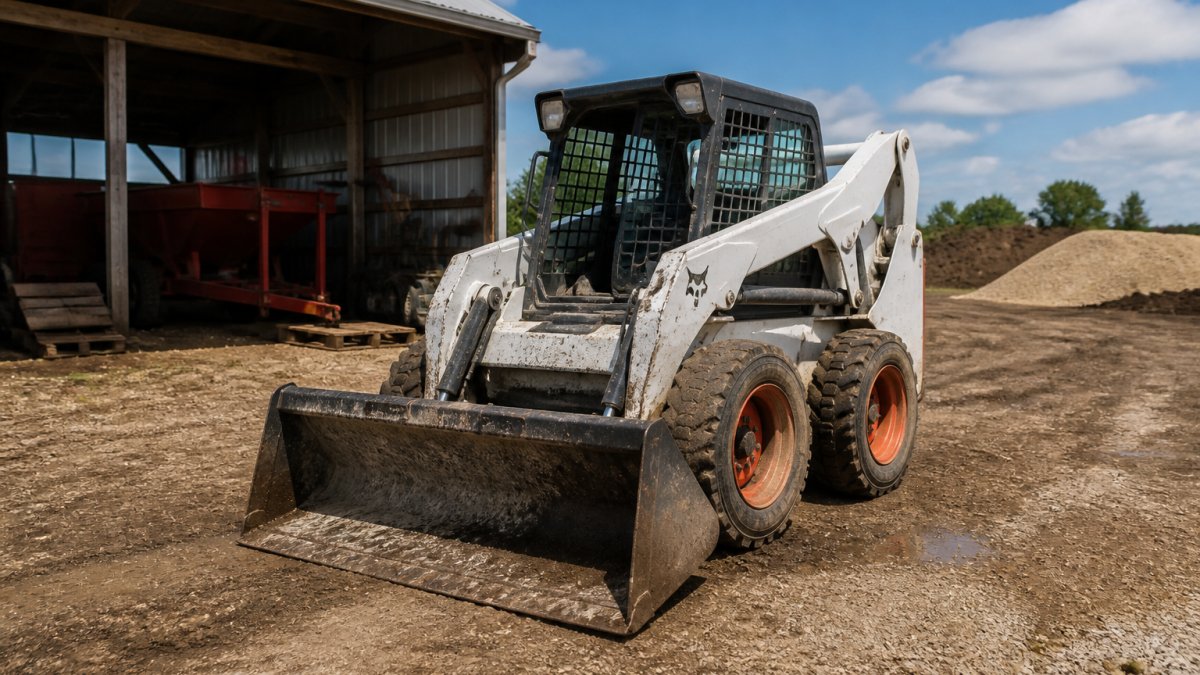
A skid steer rental for farm maintenance makes sense the moment you list the jobs piling up: fence lines to clear, gravel lanes to grade, feed and material to move, and brush that keeps creeping back into pasture. A skid steer is a compact, four-wheel (or track) loader with lift arms that carry attachments at the front.
The machine is commonly used for repetitive, tight-quarters work:
- Clearing brush and saplings along fence lines and field edges
- Grading and leveling farm roads, gates, and barn pads
- Backfilling after culvert or post repairs
- Loading and moving loose material like gravel, feed, and soil
- Cleaning out barns and pens
The global farm equipment rental market was projected at USD 37.2 billion for 2026, according to Grand View Research's farm equipment rental report, which tells you how many operations already rent instead of buy. For a job that lasts a weekend, that math usually favors renting.
Skid Steer Size for Farm Use: Match the Machine to Your Ground
Machine size is the decision that causes the most trouble. Too small and you cannot lift a full bucket of wet gravel; too big and you cannot fit through the barn door or turn on a narrow lane.
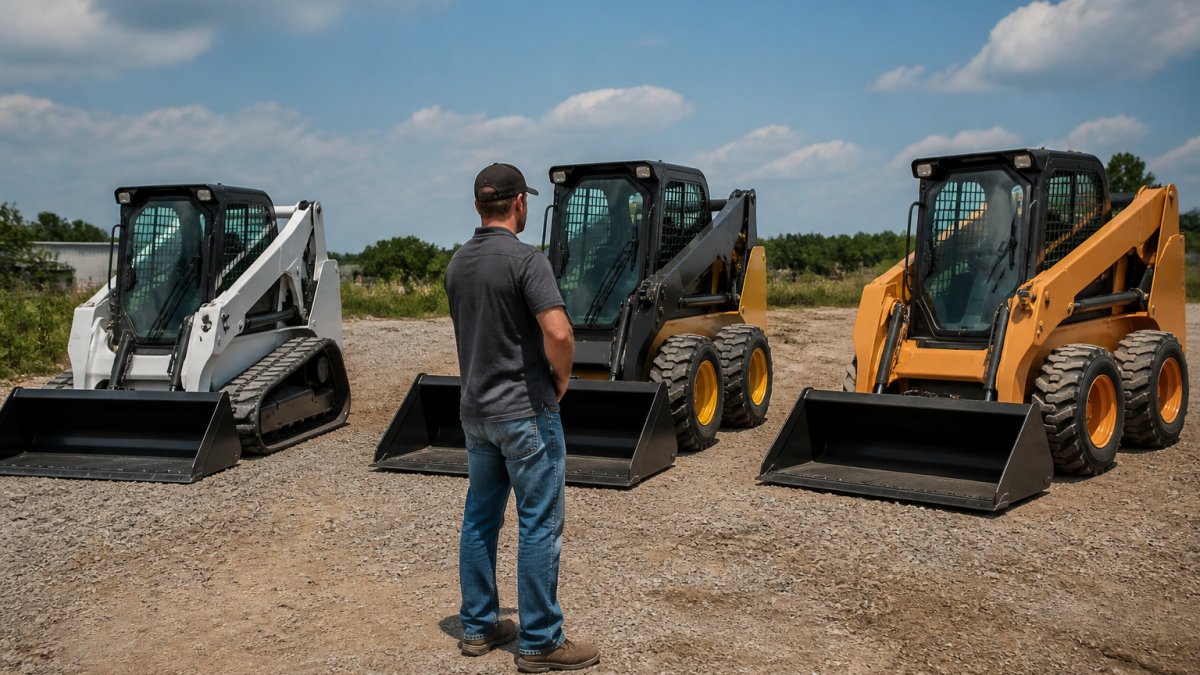
Match size to rated operating capacity (ROC), the weight the loader can handle at its rated load. Farm buyers should also weigh ground conditions: tracks float better over soft pasture and mud, while wheels suit hard gravel and concrete. If you are unsure which frame size fits your acreage and gates, how to choose the right skid steer for your job walks through capacity, width, and clearance in more detail.
A quick sizing guide:
| Farm Condition | What to Prioritize |
|---|---|
| Narrow gates, barn work | Compact frame, tight turning radius |
| Soft pasture, mud | Tracks over wheels |
| Heavy gravel and soil | Higher rated operating capacity |
| Mixed tasks, tight budget | Mid-size wheeled unit |
Skid Steer Attachments for Farm Use That Earn Their Keep
Skid steer attachments for farm use are where the machine's value multiplies. You can browse the full skid steer attachments lineup available to rent. One loader can become a brush cutter, a grader, and a material handler depending on what you bolt on. The useful way to shop is to start from the maintenance job, not the attachment name.
Match the attachment to the farm task:
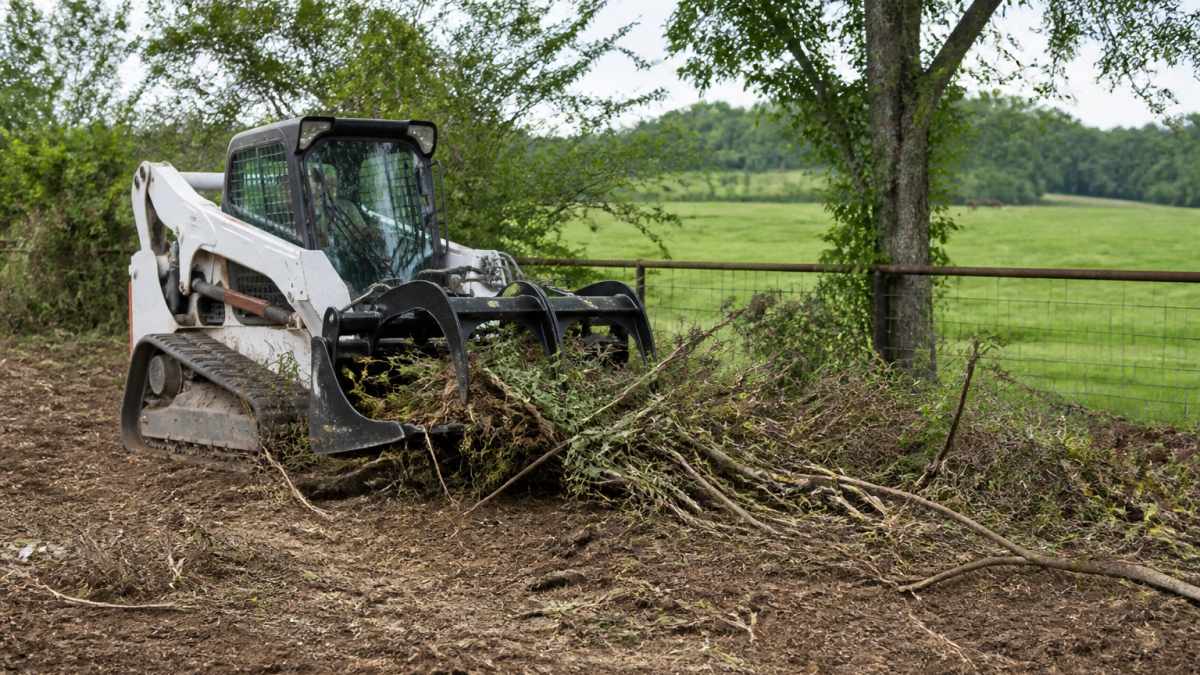
- Fence-line and field-edge brush clearing: a brush cutter for tall growth and saplings, or a grapple bucket when you need to grab, carry, and pile cut material instead of leaving it on the ground. A grapple saves a second pass with a trailer or tractor.
- Grading gravel lanes, gates, and barn pads: a smooth-edge bucket for finish grading and leveling, and a tooth bucket first when the surface is packed or potholed. Grade in short passes and keep the bucket slightly rolled back so material spreads instead of digging in.
- Manure handling and barn cleanout: a smooth bucket for scraping alleys and pens, and a grapple or manure fork when bedding and solids need to be separated and loaded. Confirm the loader's rated operating capacity against a full bucket of wet manure, which is heavier than it looks.
- Material moving: pallet forks for hay bales, feed sacks, and pallets; a bucket for gravel, soil, and sand. Forks are usually the cheapest add-on and the one farmers use most outside of grading season.
- Post and culvert repair: an auger for post holes and a bucket for backfilling. Auger sizing depends on the machine's auxiliary hydraulic flow, so confirm the attachment matches the loader before booking.
- Light dozing and spreading: a landplane or box blade for smoothing driveways and spreading gravel, and a spreader for seed or fertilizer where the rental yard offers one.
Ask the rental provider two questions before you book: which attachments are compatible with the machine you are reserving, and whether the price includes the attachment or charges it separately. Once you know which attachments fit and how they affect the rental cost, compare fuel efficient equipment options to keep both the machine’s workload and fuel use in mind.
Skid Steer vs Tractor for Farm Work: Which Fits the Job
Skid steer vs tractor for farm work comes down to the task. A tractor wins on open-field work, pulling implements, and long hauls. A skid steer wins on tight, precise, lift-and-carry jobs near buildings and fences.
Skid steers are generally suited to loader work around barns, gates, and fence lines, while tractors are generally suited to pulling implements across larger open acreage. If your job leans toward pulling implements instead, ag tractor attachments are worth comparing before you commit.
Skid Steer Rental Duration: Daily, Weekly, or Monthly
Skid steer rental duration should match the project, not the other way around. Rental providers offer multiple periods, and The Home Depot lists 4-hour, 24-hour, weekly, and monthly rental options, so you can scale the term to the job.
Pick by scope:
- 4-hour or daily: one gate repair, a single grading pass, a quick cleanout
- Weekly: multi-day brush clearing, road work, or a barn project
- Monthly: ongoing seasonal maintenance or a long build-out
Watch out: a job that runs long on a daily rate gets expensive fast. Ask about extending the term before you book, and confirm the rate for the extension up front.
What Drives Your Skid Steer Rental Cost
Rental cost depends on duration, machine size, attachments, and delivery distance, not a single flat number. Published ranges vary widely: MechLink reports weekly skid steer rental at USD 600 to USD 1,900 and monthly at USD 1,500 to USD 5,000, with actual rates set by the provider and location. The advertised rate is only the starting point. The number that matters is the all-in total you pay when the machine comes back.
Build the total before you sign:
-
Base rental rate: the day, week, or month rate for the machine itself. Longer terms lower the effective daily rate, but only if you actually use the machine for the full term.
-
Attachment charges: each add-on can carry its own daily or weekly fee. A grapple bucket and a brush cutter on the same booking can add meaningfully to the total, so price the attachments you need, not the whole menu.
-
Delivery and pickup: often priced by round-trip distance and sometimes by machine size. Confirm whether the quote is one way or both ways, and whether any drop-off fee applies.
-
Fuel: ask which fuel policy applies before you take the machine.
-
Damage waiver: ask whether an optional damage waiver is available, and what it covers, before you accept the machine.
-
Cleaning: barn work and manure handling can leave a machine dirty. Confirm the cleaning standard in the rental agreement before you return it.
-
Taxes and environmental fees: sales tax and any state or local equipment fees are added on top of the quoted rate.
A common pattern is for the advertised rate to cover the machine and nothing else. Ask for the all-in total, delivery included, and get the extension rate in writing before the term ends. For a closer look at how the numbers break down, see our rental cost breakdown for daily, weekly, and monthly rates.
Confirm the extension price up front rather than discovering it at return.
Booking Your Skid Steer Rental with Diamond E Rental
Booking starts with matching the machine and attachments to your job, then confirming availability and delivery. At Diamond E Rental, we serve the Brazos Valley from our location at Knuckleheads Hardware and offer delivery on all equipment based on distance.
Here is how we would plan it:
- List your jobs and the attachments each one needs
- Confirm the machine size and rental period
- Check availability and schedule delivery
- Review the total cost, delivery included
- Confirm the return date and extension terms
Whether you are a contractor crew or a homeowner tackling a one-time project, Diamond E Rental serves both. Visit our website to pick your skid steer and reserve it online when you are ready.
Frequently Asked Questions
What size skid steer is best for farm maintenance?
Most farm maintenance work, including fence lines, farm roads, and pasture cleanup, fits a mid-size skid steer in the 1,500 to 2,200 pound rated operating capacity range. Smaller machines suit tight barns and sensitive turf, while larger units move more material per pass. Match the size to your narrowest gate, your trailer, and the weight of the attachments you plan to run.
Should I rent a skid steer or a tractor for farm work?
A skid steer turns in its own footprint and handles tight spaces, grading, and attachment swapping well, which suits barnyards, fence lines, and land clearing. A tractor typically wins on pulling power, long-distance hauling, and running PTO implements like mowers and spreaders. For short-term maintenance jobs that need maneuverability, skid steer rental is often worth comparing against buying either machine. Rent the skid steer for the tight work and keep the tractor for field-scale tasks.
How long should I rent a skid steer for farm maintenance?
Estimate the job in operating hours first, then add travel and setup time. A day covers small jobs like gravel spreading or cleaning out a barn. Weekly rental fits multi-task projects such as fence line clearing plus road grading, and monthly rental makes sense for extended land clearing. Rental providers generally offer multiple periods, so you can match the term to the project. Ask about extending the rental before you commit if your timeline is uncertain.
Is delivery available for a skid steer rental?
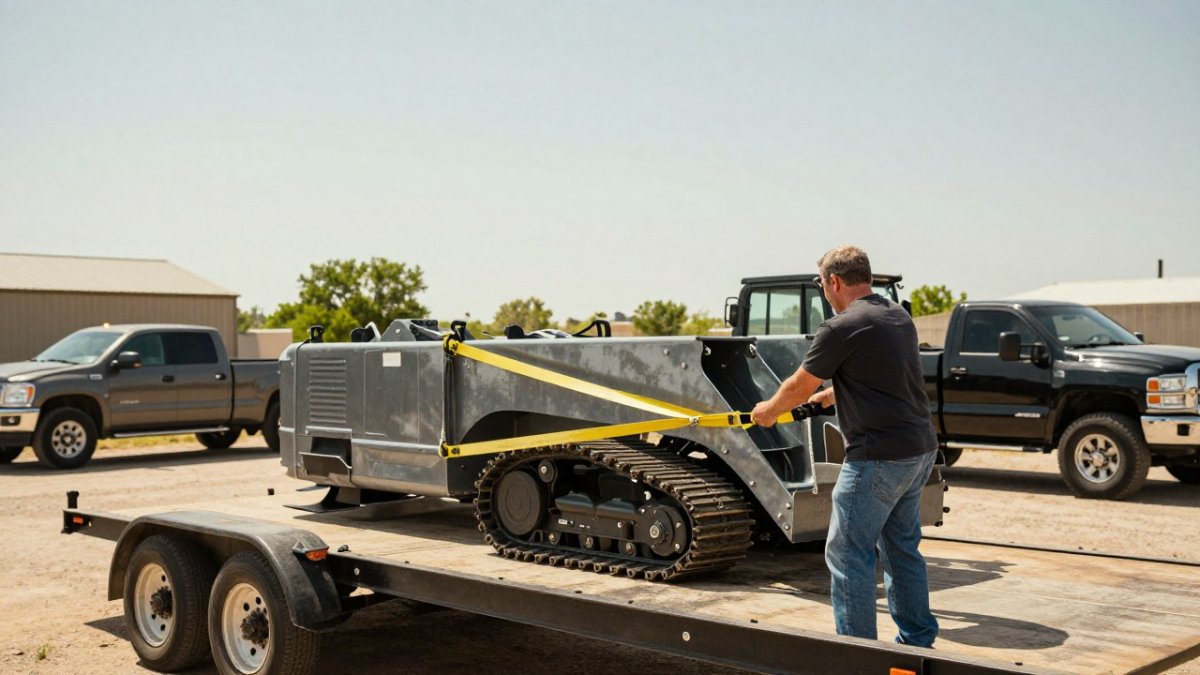
Diamond E Rental offers delivery on all equipment, with the fee based on distance to your job site. Delivery saves you from needing a heavy trailer and a truck rated for the machine's weight. Ask what the total cost includes, so nothing surprises you on the invoice.
Your farm maintenance list will not shrink on its own, and the right machine turns a week of manual labor into a couple of days of work. Diamond E Rental offers skid steers and attachments from trusted brands, delivery based on distance, and straightforward rental terms for contractors and DIYers alike. Get started with Diamond E Rental and put the right loader to work on your fields and fence lines.