 blog
blog
Skid Steer Rental for Residential Projects: 2026 Guide
Table of Contents
- Why a Skid Steer Rental for Residential Work Beats Hiring a Crew
- Wheeled vs. Tracked: Which Skid Steer Fits Your Property
- Small Skid Steer Rental: Sizing the Machine to Your Yard
- Skid Steer Rental Rates: What Drives the Final Bill
- Skid Steer Attachments for Landscaping and Yard Work
- Skid Steer Rental Duration: Hourly, Daily, Weekly, or Monthly
- Access, Ground Conditions, and Protecting Your Property
- Safety, Delivery, and Rental Logistics for Homeowners
- Frequently Asked Questions
Last Updated: October 18, 2026
Why a Skid Steer Rental for Residential Work Beats Hiring a Crew
A skid steer rental for residential work puts a compact, versatile loader in your hands for a fraction of what a full crew costs.
The machine does the heavy lifting. You keep control of the schedule.
Hiring a crew means waiting on their calendar, paying for labor hours, and often paying a minimum job charge even for small tasks.
Below, we'll show you how to pick the right machine, estimate your bill, and avoid the mistakes that catch first-time renters.
Wheeled vs. Tracked: Which Skid Steer Fits Your Property
The choice between a wheeled loader and a compact track loader comes down to your ground conditions and how much you care about your lawn. Wheeled machines turn tighter and travel faster on hard surfaces. Tracked machines float over soft ground and grip better on slopes.
When a Wheeled Loader Wins
Pick a wheeled skid steer for paved driveways, gravel pads, and firm, dry soil. Wheels are gentler on finished surfaces and cheaper to rent. They also maneuver well in tight spaces like a side yard or between a house and a fence line.
When a Compact Track Loader Wins
Choose tracks for mud, sand, fresh fill dirt, or any job where you don't want ruts. Tracks spread the machine's weight over a larger area, so it sinks less. The trade-off is a higher rental rate and more surface scuffing when you turn on pavement.
If your property has a mix of surfaces, ask about the ground conditions before you book. A quick phone call saves a lot of frustration.
Small Skid Steer Rental: Sizing the Machine to Your Yard
A small skid steer rental is often the smartest pick for residential work. Compact and small-frame loaders fit through standard gates, work in tight backyards, and cause less damage than full-size machines.
Match the machine to the job, not to your ego. A mini skid steer handles mulch, gravel, and light grading in a typical yard. A medium-frame loader makes sense only when you're moving serious volume or lifting heavy pallets.
| Machine Size | Best For | Typical Residential Use |
|---|---|---|
| Mini skid steer | Tight access, light material | Mulch, gravel, small grading |
| Small-frame loader | Standard yards, most DIY jobs | Driveway repair, patio base, brush clearing |
| Medium-frame loader | Large lots, heavy lifting | Bulk earthmoving, pallet handling |
Matching the Machine to Common Home Projects
Use this project-first approach to pick a size before you call for a quote:
- Driveway grading and gravel refresh: a small-frame wheeled loader with a bucket and a box blade or grader attachment. You need enough capacity to move a few yards of gravel per pass and enough traction to pull a blade on a firm surface. Tracks help if the driveway edge is soft.
- Yard leveling and regrading: a small-frame loader with a bucket and a land plane or box blade. Confirm the machine can reach the low spots without crossing septic fields or drain lines, and plan turns so you don't rut wet soil.
- Debris and brush removal: a small-frame or mini loader with a grapple. Grapple work rewards hydraulic flow and visibility more than raw size, so a smaller machine with a good grapple often beats a big loader in a tight yard.
- Patio or shed base excavation: a small-frame loader with a bucket, plus a laser level or transit for depth control. Check that the machine's reach and dump height clear the spoil pile location.
- Post holes for fences and decks: a mini or small-frame loader with an auger. Auger diameter and the machine's auxiliary hydraulic flow determine how cleanly it digs in your soil type.
Measure Before You Reserve
Measure your narrowest gate and any overhead obstacles before you reserve. A machine that won't fit is a wasted rental day. Also check the turning radius you need at the work area, the slope of any path you'll cross, and whether the ground is firm enough for the machine you're considering. If your access is tight or your ground is soft, a mini skid steer or a tracked model is usually the safer choice than a larger wheeled loader.
Skid Steer Rental Rates: What Drives the Final Bill
Skid steer rental rates depend on machine size, rental period, attachments, and delivery distance. There's no single flat number, because a mini skid steer for a few hours and a tracked loader for a month are very different bookings. Most providers quote a base machine rate, then add charges for extras.
Here's what actually moves your final bill:
- Machine size and type: tracked loaders cost more than wheeled models of the same frame size
- Rental period: daily, weekly, and monthly rates scale down per day, but the break-even point varies by provider
- Attachments: each bucket, fork, or auger can carry its own daily rate, and some providers charge a swap fee mid-rental
- Delivery and pickup: often priced by round-trip distance from the branch, sometimes with a flat minimum
- Fuel: many providers rent with a full tank and require a full tank on return, or charge a refueling fee plus a per-gallon markup
- Cleaning: a dirty machine can trigger a cleaning charge, especially if mud is packed into the tracks or undercarriage
How to Estimate Your All-In Total
Build your estimate in layers so nothing surprises you at return:
- Base rental: multiply the daily rate by the number of days, then check whether a weekly rate is cheaper for your span.
- Attachments: add each attachment's daily rate for the days you need it, not the whole rental if you can swap.
- Delivery and pickup: ask for the round-trip charge to your address, not just one way.
- Fuel: confirm the return policy and estimate refueling cost if you'll run the machine hard.
- Damage waiver and taxes: add the waiver percentage and applicable sales tax to the subtotal.
- Deposit: set it aside as a refundable amount, but budget for it upfront.
A common pattern is that delivery and pickup plus the damage waiver together add a meaningful share to a short rental, which is why a one-day booking can cost proportionally more per hour than a weekly one. Always ask for a full written quote with every line item before you commit.
A second common surprise is fuel. If you return the machine low on fuel, expect a refueling fee. Top off before return unless your agreement says otherwise.
For current pricing and a free quote, check with Diamond E Rental directly and ask them to itemize delivery, fuel policy, waiver, deposit, and tax so you can compare the all-in number against any other quote.
Skid Steer Attachments for Landscaping and Yard Work
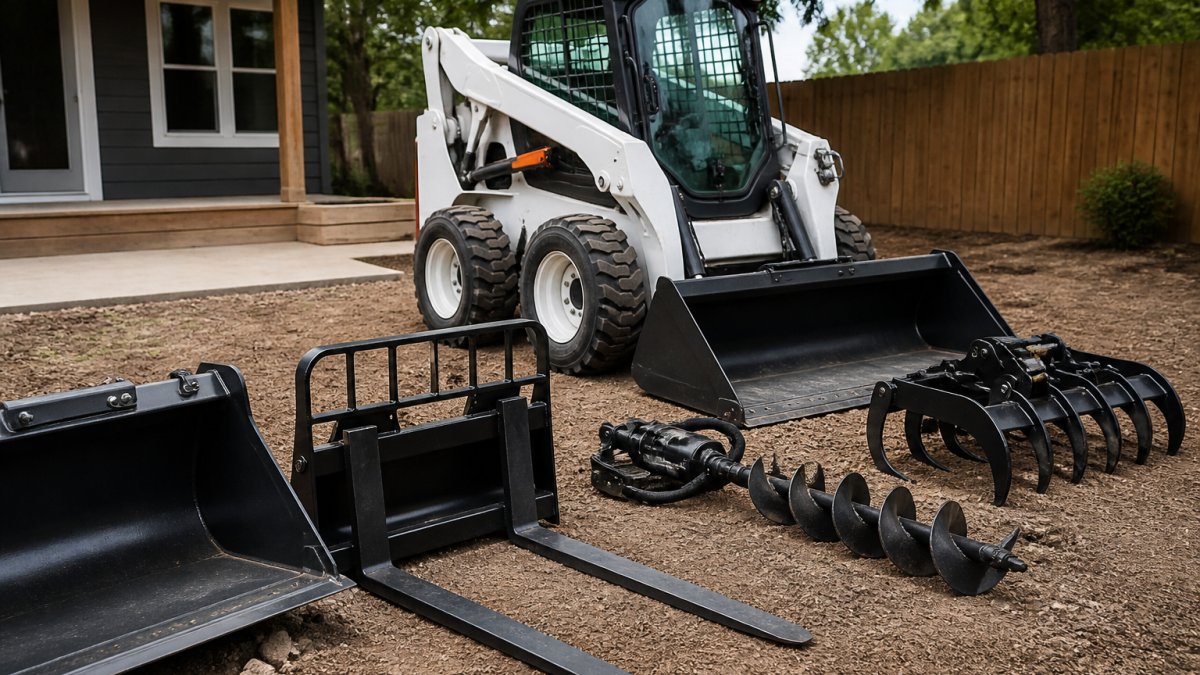
Skid steer attachments for landscaping turn one machine into a whole crew. Swap a bucket for forks and you're moving pallets instead of dirt.
The attachments homeowners ask for most:
- Bucket: digging, loading, and moving soil, gravel, and mulch
- Forks: lifting pallets, sod, and building materials
- Auger: drilling post holes for fences and decks
- Grapple: clearing brush, branches, and debris
- Box blade or grader: smoothing and leveling ground
Match the attachment to the task and confirm it's available when you book. Popular attachments go fast in busy seasons, so reserve early.
Skid Steer Rental Duration: Hourly, Daily, Weekly, or Monthly
Skid steer rental duration shapes both your cost and your pace. Short jobs fit an hourly or daily rental. Multi-day projects usually cost less per day on a weekly rate. Long renovations can justify a monthly booking.
| Duration | Best For | Billing Note |
|---|---|---|
| Hourly | Quick tasks, small loads | Minimum hours often apply |
| Daily | Weekend projects | Usually a set 8-24 hour window |
| Weekly | Multi-day landscaping | Lower per-day cost |
| Monthly | Large renovations | Best per-day value |
Be realistic about how long the work takes. A project that looks like one day often stretches to two once you factor in weather and trips for material.
Access, Ground Conditions, and Protecting Your Property
Property access decides whether a rental even works. Before you book, walk your route and check gate widths, fence lines, overhead branches, and soft spots in the yard.
Protect your property while you work:
- Lay plywood or mats on finished surfaces you'll cross
- Keep the loader off septic fields and drain lines
- Avoid turning sharply on pavement with tracks
- Watch for irrigation heads, cables, and shallow pipes
Ground conditions change with the weather. Wet soil ruts easily, so schedule around dry stretches when you can. If your yard is soft, a tracked machine protects the surface far better than wheels.
Safety, Delivery, and Rental Logistics for Homeowners
Safety and logistics are where first-time renters stumble. A skid steer is a rugged, adaptable machine, but it demands respect. Read the operator manual, keep bystanders clear, and never lift a load over people.
On delivery, plan ahead. Clear a level drop-off spot and confirm the delivery window. If you're not comfortable operating the machine, ask about a walkthrough at drop-off.
A few logistics questions to settle before the machine arrives:
- Where exactly will it be dropped off?
- Who will be on site to receive it?
- Do you have fuel and a safe parking spot?
- What's the pickup time, and does it match your schedule?
Answer those, and the rental runs smoothly from drop-off to return.
Frequently Asked Questions
What is the average rental rate for a skid steer?
There is no single average, because skid steer rental rates depend on machine size, attachment package, rental duration, and delivery distance. A small skid steer rental for a weekend yard project typically costs less than a large tracked machine rented by the week. Ask for a written quote that itemizes delivery, fuel, and damage waiver so the total is clear before you commit.
What size skid steer is best for residential projects?
For most home landscaping and site preparation jobs, a small or compact model in the 1,300 to 1,800 pound operating capacity range handles digging, grading, and material handling without tearing up the yard. Small-frame and mini skid steers fit through standard gates and work well in tight backyards. Choose a medium-frame loader only if you are moving large volumes of dirt or gravel and have wide, firm access to the work area.
Should I rent a wheeled skid steer or a compact track loader?
Pick a wheeled skid steer for firm, dry ground where you need speed and lower rental cost. Pick a compact track loader for soft, wet, or sloped ground, or when you want to protect finished turf and reduce rutting. Tracked machines cost more per day but spread weight over a larger footprint, which matters on residential lawns and graded sites. Match the undercarriage to your ground conditions before you book.
How long should I rent a skid steer for a home project?
Most residential jobs fit a daily or weekend rental, while grading a full yard or clearing a lot often runs three to five days. If your project spans multiple weekends, a weekly rental usually costs less than two separate daily bookings. Monthly rental makes sense for phased projects like a driveway rebuild or a large landscaping install. Ask about extension terms up front so a longer job does not trigger a higher rate.
A residential project can stall fast when you're waiting on a crew or wrestling with the wrong machine. Renting gives you control of the timeline and the budget. Diamond E Rental offers skid steers, mini excavators, and bulldozers from trusted brands, with delivery available based on distance and a convenient location at Knuckleheads Hardware serving the Brazos Valley. Get started with Diamond E Rental and put the right machine to work on your property this weekend.